AI Customer Journey Mapping with Adobe Sensei transforms how Marketing Managers identify and optimize critical customer touchpoints. By integrating machine learning into data analysis, you can move beyond reactive insights to truly predictive engagement strategies. This guide details how to configure AI-driven journey mapping, leverage Adobe Sensei's capabilities for deeper insights, and implement automation to refine customer experiences at scale.
Uncover Hidden Insights with AI Customer Journey Mapping
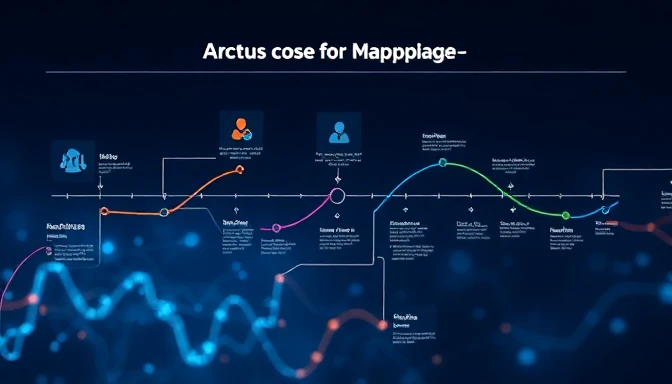
Marketing Managers frequently struggle with fragmented customer data, leading to incomplete journey views and missed optimization opportunities. Traditional journey mapping often relies on manual data aggregation and assumptions, limiting its scalability and predictive power. AI customer journey mapping addresses this by autonomously processing vast datasets, identifying subtle patterns, and predicting future customer behaviors with high accuracy. This capability allows you to pinpoint moments of friction, anticipate needs, and proactively deliver personalized experiences across all channels. For instance, an AI system can detect that customers who interact with three specific content pieces within 48 hours are 30% more likely to convert, a pattern a human analyst might overlook.
Adobe Sensei, the AI and machine learning engine powering Adobe Experience Platform (AEP), is ideal for this task. It integrates directly with your customer data, providing capabilities like intelligent segmentation, predictive analytics, and automated personalization. This means you gain a unified view of each customer, enriched with AI-driven insights, enabling Marketing Managers to build more effective, dynamic journeys. Explore Adobe Experience Platform documentation for detailed API and integration guides.
🎯 Pro move: Focus initial AI journey mapping efforts on high-value segments or known conversion bottlenecks. This provides measurable early wins and builds internal momentum for broader adoption.
Data Ingestion & Harmonization for Unified Views
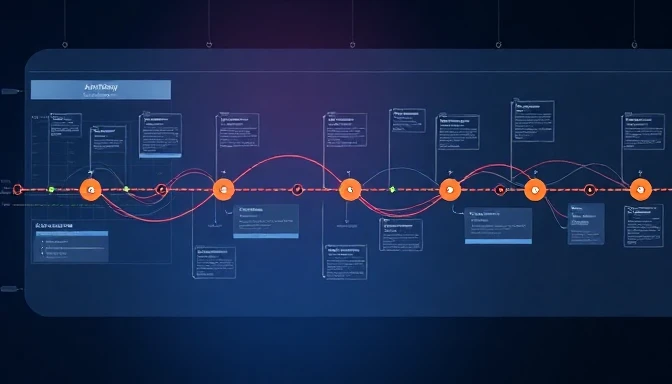
Effective AI journey mapping begins with robust data. Marketing Managers must consolidate data from disparate sources like CRM (e.g., Salesforce), marketing automation (e.g., Marketo Engage), web analytics (e.g., Adobe Analytics), customer support (e.g., Zendesk), and offline interactions. Adobe Experience Platform (AEP) acts as the central hub, ingesting this data using its Real-time Customer Profile and Experience Data Model (XDM). AEP provides pre-built connectors for common marketing tools, streamlining the ingestion process.
For example, a Marketing Manager might configure data streams from their e-commerce platform (product views, purchases), email service provider (opens, clicks), and mobile app (session duration, feature usage). XDM then harmonizes these diverse datasets into a standardized format, resolving identity across different channels to create a single, unified customer profile. This identity stitching is critical; without it, AI algorithms would analyze fragmented data, leading to inaccurate insights. Expect initial data ingestion and schema mapping to take 4-8 weeks for complex multi-source setups, depending on data cleanliness and existing API infrastructure.
AI-Driven Persona Segmentation
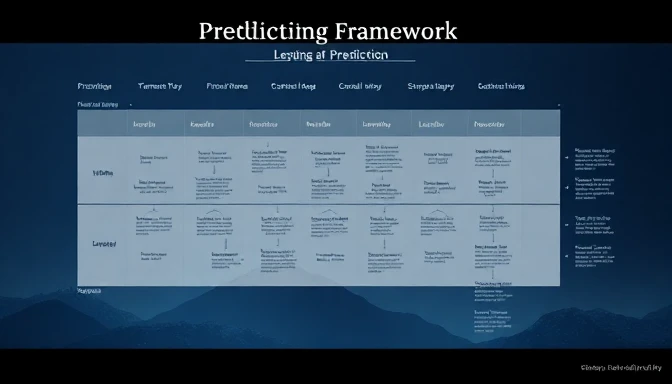
Traditional personas are static, based on demographics or broad behavioral trends. AI-driven persona segmentation, powered by Sensei, creates dynamic, evolving segments based on real-time behavior, preferences, and predictive scores. Sensei analyzes the harmonized customer profiles in AEP to identify natural clusters of customers with similar journey patterns, product affinities, and propensities.
A Marketing Manager can define initial criteria, such as "customers who have purchased a specific product category," and Sensei will then expand this by identifying other shared attributes and behaviors. For instance, Sensei might reveal a segment of "early adopters" who consistently engage with new product announcements, spend 20% more time on product comparison pages, and have a 15% higher likelihood of converting within 7 days of a new product launch. These AI-generated segments are far more granular and actionable than manually created ones, allowing for hyper-personalized messaging and offers. Sensei's segmentation models update continuously, ensuring personas remain relevant as customer behaviors shift.
Predictive Path Analysis
Understanding past customer paths is useful, but predicting future paths is game-changing. Sensei's predictive analytics capabilities analyze historical journey data to forecast the next likely action a customer will take, their probability of conversion, or their risk of churn. This isn't just about simple sequence analysis; Sensei identifies complex, non-linear dependencies and influences across touchpoints.
Consider a customer browsing a high-value product. Sensei can analyze their past interactions (e.g., viewing pricing pages, downloading a whitepaper, engaging with a specific ad) and predict, with an 85% confidence score, that they are likely to respond positively to a personalized demo invitation within 24 hours. Conversely, it might identify a segment of users who, after three consecutive email opens without a click, are at an 60% churn risk. Marketing Managers can then use these predictions to trigger automated, proactive interventions, such as a targeted email with a limited-time offer or a sales outreach. This shifts marketing from reactive responses to anticipatory engagement, directly impacting conversion rates and customer retention.
Why AI-Powered Journey Mapping Matters for Marketing Managers Now
The competitive landscape demands more than just understanding customer behavior; it requires anticipating it. Marketing Managers face increasing pressure to deliver hyper-personalized experiences at scale, prove ROI on every marketing dollar, and adapt to rapidly changing customer expectations. Static journey maps, updated quarterly or annually, simply cannot keep pace.
⚠️ Caution: Validate any AI output against your domain context before shipping — model defaults rarely match a specific workflow without adjustment.
AI-powered journey mapping, particularly with a platform like Adobe Sensei, provides the agility and depth of insight needed to excel in 2026. It moves beyond descriptive analytics ("what happened?") to predictive ("what will happen?") and prescriptive ("what should we do?"). According to Gartner's 2026 Marketing Technology Hype Cycle, AI-driven personalization is reaching the Plateau of Productivity, meaning the technology is maturing and delivering tangible business value. This makes it a critical investment for Marketing Managers aiming to maintain a competitive edge and optimize their marketing spend.
Bridging the Data-Action Gap
Many organizations collect vast amounts of customer data, but struggle to translate it into actionable strategies. Marketing Managers often find themselves drowning in dashboards without a clear path to impact. AI journey mapping directly addresses this by identifying specific insights and recommending actions. Sensei, within AEP, not only shows you patterns but also suggests optimal next steps or triggers based on predicted outcomes.
For example, Sensei might identify that customers who view a "compare products" page for more than 5 minutes but don't add to cart have a 70% likelihood of abandoning the purchase. The system could then automatically suggest an A/B test for a pop-up offering a 10% discount or a live chat prompt, directly bridging the gap between data observation and a concrete marketing action. This capability significantly reduces the time from insight to implementation, allowing Marketing Managers to iterate and optimize journeys much faster than manual analysis would permit.
Scaling Personalization Efforts
Delivering truly personalized experiences to millions of customers manually is impossible. Even segmenting into hundreds of micro-segments creates an unmanageable content and campaign matrix. AI-powered journey mapping with Adobe Sensei automates the personalization process, enabling Marketing Managers to scale their efforts without linearly increasing resource allocation. Sensei's algorithms dynamically adjust content, offers, and channel preferences based on each customer's real-time journey state and predictive scores.
Imagine a Marketing Manager responsible for a subscription service. Sensei can identify customers who are nearing their renewal date, have shown signs of disengagement (e.g., decreased login frequency, ignored recent emails), and predict a high churn risk. Instead of a generic renewal email, Sensei could automatically trigger a personalized offer based on their past usage patterns and perceived value, delivered via their preferred channel (e.g., a push notification for mobile users, a targeted ad for web users). This level of dynamic, individualized personalization is a significant differentiator and is difficult to achieve without AI.
Measuring Journey ROI with Precision
Proving the ROI of marketing initiatives is a constant challenge. AI-powered journey mapping provides Marketing Managers with granular data on how specific touchpoints and interventions contribute to overall journey progression and business outcomes. By tracking customer movement through AI-defined journey stages, you can attribute conversions, revenue, and retention rates directly to specific marketing actions.
Adobe Sensei's attribution models, integrated within AEP, can move beyond last-click or first-click models to more sophisticated, multi-touch attribution. This allows Marketing Managers to understand the true impact of each interaction, even if it doesn't lead to an immediate conversion. For instance, Sensei might demonstrate that while a specific retargeting ad has a low direct conversion rate, it significantly increases the likelihood of a later email conversion by 25%. This deeper understanding enables more accurate budget allocation and optimization of marketing spend, moving Marketing Managers from educated guesses to data-driven investment decisions.
The Predictive Journey Mapping Framework
Implementing AI-powered customer journey mapping requires a structured approach. This framework guides Marketing Managers through the essential stages, from initial setup to continuous optimization, ensuring that AI insights translate into tangible business value. This isn't a one-time project but an ongoing cycle of learning and refinement.
Defining Journey Goals and KPIs
Before diving into data, Marketing Managers must clearly define the specific business goals for each customer journey. Are you aiming to increase customer acquisition, reduce churn, boost average order value, or improve customer satisfaction scores? Each goal will dictate the data points to prioritize, the AI models to deploy, and the key performance indicators (KPIs) to track.
For an acquisition journey, relevant KPIs might include conversion rates at each funnel stage, cost per acquisition (CPA), and time to first purchase. For a retention journey, focus on metrics like customer lifetime value (CLTV), churn rate, and repeat purchase frequency. Without clear goals, AI insights can become a novelty rather than a strategic asset. Use a SMART (Specific, Measurable, Achievable, Relevant, Time-bound) framework for goal setting. This initial step often involves cross-functional workshops with sales, product, and customer service teams to ensure alignment on desired outcomes.
Architecting the Data Foundation
The success of AI journey mapping hinges on a robust, unified data foundation. Marketing Managers must work with data engineering teams to ensure all relevant customer data is ingested into Adobe Experience Platform. This includes both behavioral data (website clicks, app usage) and declarative data (profile attributes, preferences). The Experience Data Model (XDM) within AEP provides a standardized, flexible schema for organizing this data, making it readily accessible for Sensei's AI models.
This architecture phase involves defining identity namespaces (e.g., email address, device ID, loyalty number) to accurately stitch together customer profiles across different sources. Data quality is paramount here; incomplete, inconsistent, or duplicate data will lead to flawed AI insights. Implement data governance policies and validation rules during ingestion to maintain data integrity. A well-architected data foundation ensures Sensei has a comprehensive and accurate view of every customer's journey, enabling reliable predictions and segmentations.
Selecting AI Models and Algorithms
Adobe Sensei offers a suite of pre-built AI models for common marketing use cases, such as churn prediction, next-best-offer recommendation, and customer lifetime value prediction. Marketing Managers can often start with these out-of-the-box models. However, for more specific or nuanced insights, you may need to configure custom Sensei models within AEP's Data Science Workspace.
This involves selecting the appropriate algorithms (e.g., classification, regression, clustering), defining features (the data points the AI will analyze), and setting target variables (the outcome you want to predict). For example, to predict churn, features might include recent login activity, support ticket history, and engagement with loyalty programs, with the target variable being "customer churned in the next 30 days." Marketing Managers don't need to be data scientists, but understanding the basics of model selection and feature engineering helps in collaborating with technical teams and interpreting results. Sensei often provides explainable AI features, indicating which data points most influenced a prediction, increasing trust and usability.
Iterative Testing and Optimization
AI journey mapping is not a "set it and forget it" solution. Marketing Managers must adopt an iterative approach, continuously testing and optimizing their AI-driven journeys. This involves setting up A/B tests or multivariate tests for different journey paths, personalized content variations, or timing of interventions. AEP allows you to easily define test groups and measure the impact of changes on your defined KPIs.
For instance, you might test two versions of an onboarding journey: one with a generic welcome sequence and another with an AI-personalized sequence based on initial product usage. Measure conversion rates, engagement metrics, and retention rates for both groups. Use these insights to refine your AI models, adjust journey orchestration rules, and improve content. Sensei's continuous learning capabilities mean that as more data flows in and tests are conducted, the models become more accurate and the journey optimizations more effective. This iterative cycle of hypothesis, test, learn, and refine is crucial for maximizing the value of AI in journey mapping.
Core Workflows: Building Dynamic AI Journeys
Implementing AI-powered journey mapping transforms static customer paths into dynamic, adaptive experiences. Marketing Managers can automate touchpoint identification, personalize engagement at scale, detect anomalies in real-time, and optimize conversion funnels. These workflows demonstrate the practical application of Adobe Sensei within Adobe Experience Platform.
Automating Touchpoint Identification and Enrichment
Manually mapping every customer touchpoint across complex, multi-channel journeys is impossible. AI automates this by continuously scanning all ingested data within AEP. Adobe Sensei identifies every interaction (e.g., website visit, email open, ad click, support chat, physical store visit recorded via POS integration) and automatically associates it with the unified customer profile.
Procedure:
- Configure Data Connectors: Within AEP, connect all relevant data sources (Adobe Analytics, Marketo Engage, Salesforce, custom APIs for offline data). Ensure data streams are active and mapping to XDM schemas.
- Define Identity Stitching Rules: Use AEP's Identity Service to specify which identifiers (e.g., email, device ID, loyalty number) should be used to unify customer profiles across different sources. This ensures a single, comprehensive view of each customer.
- Activate Real-time Customer Profile: Enable the Real-time Customer Profile in AEP to consolidate all customer data and touchpoints into a single, continuously updated profile. This powers Sensei's real-time analysis.
- Leverage Sensei for Touchpoint Discovery: Sensei automatically analyzes the stream of touchpoints in the Real-time Customer Profile. It can identify new, previously unmapped touchpoints and enrich existing ones with contextual data (e.g., sentiment from a chat transcript, product category from a page view).
- Visualize Journey Paths: Use AEP's Journey Orchestration tools or integrate with visualization platforms to see AI-discovered touchpoints and common paths. Sensei can highlight frequently traversed paths and identify unexpected deviations.
This automated identification ensures Marketing Managers have a complete and accurate picture of every customer's journey, even as new channels and interactions emerge.
Personalizing Engagement at Scale
Once touchpoints are identified and profiles are enriched, Sensei enables hyper-personalization across every interaction. This goes beyond simple segmentation, tailoring content and offers based on individual customer context, preferences, and predictive scores.
Procedure:
- Develop Dynamic Content Blocks: Create modular content pieces (e.g., email subject lines, hero images, product recommendations, call-to-action buttons) that can be dynamically assembled.
- Integrate with Content Management: Connect your content management system (e.g., Adobe Experience Manager) to AEP. Ensure content metadata allows for easy tagging and retrieval based on customer attributes or journey stage.
- Define Personalization Rules with Sensei: Use Sensei's predictive capabilities (e.g., next-best-offer, churn risk score, likelihood to purchase a specific category) to define rules for content delivery. For example:
- IF
Sensei_ChurnRisk_Score> 0.7 ANDLast_Purchase_Date> 90 days, THEN display "Exclusive Retention Offer" in email. - IF
Sensei_Product_Affinity_Scorefor "Category X" > 0.8 ANDLast_Viewed_Productis in "Category Y", THEN recommend products from "Category X".
- Orchestrate Journey Paths: Use AEP Journey Orchestration to build dynamic journeys. Integrate Sensei's real-time predictions to branch paths, trigger specific messages, or present personalized content. A customer entering a high-churn-risk segment might be routed to a specific retention journey with a personalized offer, while a high-value customer might receive an exclusive pre-launch invitation.
- Monitor and Iterate: Continuously monitor personalization effectiveness through A/B testing and performance metrics (e.g., conversion rate, CTR, engagement). Sensei's models will learn and adapt over time, refining recommendations.
This workflow ensures that every customer receives the most relevant message at the optimal time, significantly boosting engagement and conversion rates.
Real-time Anomaly Detection for Proactive Intervention
AI excels at identifying deviations from normal patterns. Marketing Managers can use Sensei for real-time anomaly detection to spot unusual customer behaviors that might signal a problem (e.g., frustration, fraud, unexpected churn) or an opportunity (e.g., sudden interest in a new product category).
Procedure:
- Establish Baseline Behaviors: Sensei automatically learns "normal" customer behavior patterns by analyzing historical data within AEP. This includes typical website navigation, email open rates, purchase frequencies, and support interaction volumes.
- Configure Anomaly Detection Models: Within AEP's Data Science Workspace, set up Sensei models specifically for anomaly detection. You can define thresholds for what constitutes an "anomaly" (e.g., 3 standard deviations from the mean).
- Define Alert Triggers: Configure AEP to trigger alerts or actions when an anomaly is detected for an individual customer or a segment. Examples:
- A customer who typically visits 5 pages per session suddenly visits 20 pages in a short burst, then abandons the cart. (Potential frustration or high intent).
- A customer who usually opens 80% of emails suddenly stops opening any for a week. (Early churn signal).
- A customer makes an unusually large purchase from a new device in a different geographic location. (Potential fraud).
- Automate Remedial Actions: Integrate these anomaly alerts into Journey Orchestration. For a frustrated customer, trigger a proactive chat invitation. For a churn risk, initiate a personalized re-engagement sequence. For potential fraud, flag the transaction for manual review.
- Feedback Loop: Collect feedback on the effectiveness of anomaly alerts and remedial actions. Use this to refine Sensei's anomaly detection models and reduce false positives.
Real-time anomaly detection allows Marketing Managers to intervene proactively, mitigating negative experiences and capitalizing on unexpected opportunities before they escalate.
Optimizing Conversion Funnels with Predictive Insights
AI-powered journey mapping provides the granular data and predictive insights needed to continuously optimize conversion funnels. By understanding the likelihood of conversion at each stage and identifying friction points, Marketing Managers can strategically deploy resources to maximize conversions.
Procedure:
- Map Funnel Stages: Define clear stages within your conversion funnels (e.g., Awareness, Consideration, Intent, Purchase). Ensure these stages are reflected in your XDM schema and AEP data.
- Calculate Stage-specific Conversion Probabilities: Use Sensei's predictive models to calculate the probability of a customer moving from one stage to the next. For example, what's the likelihood a customer who viewed a product page will add it to their cart?
- Identify Bottlenecks: Analyze the conversion probabilities between stages. Sensei can highlight stages with unusually low conversion rates, indicating a bottleneck. For instance, if the drop-off from "Add to Cart" to "Checkout Complete" is 70%, that's a critical friction point.
- Simulate Interventions: Use Sensei's "What-If" analysis capabilities (if available in AEP's Data Science Workspace) to simulate the impact of different interventions (e.g., a discount, a personalized recommendation, a simplified form) on conversion rates.
- Automate A/B Testing: Implement automated A/B tests within AEP Journey Orchestration. For a bottleneck stage, test different messaging, offers, or UX changes. Sensei can even dynamically allocate traffic to the winning variant.
- Dynamic Offer Optimization: For customers at high-intent stages but showing hesitation, Sensei can dynamically recommend the "next best offer" that maximizes conversion probability while minimizing discount erosion. This could be a small discount, free shipping, or a value-add.
By continuously using Sensei's predictive insights, Marketing Managers can fine-tune every aspect of their conversion funnels, driving higher revenue and more efficient marketing spend.
Common Mistakes in AI Journey Orchestration & Fixes
Implementing AI-powered customer journey mapping is a powerful step, but Marketing Managers can encounter several pitfalls that hinder success. Recognizing these common errors and applying specific fixes ensures your AI investments yield maximum returns.
Ignoring Data Quality and Governance
The most common and detrimental mistake is underestimating the importance of clean, consistent data. AI models are only as good as the data they consume. Poor data quality leads to inaccurate insights, flawed predictions, and ultimately, ineffective or even counterproductive journey orchestrations. If customer profiles are fragmented, contain duplicates, or have missing values, Sensei's ability to provide a unified, accurate view is compromised.
Fixes:
- Implement Robust Data Governance: Establish clear data ownership, definitions, and quality standards across all data sources feeding into AEP. Define processes for data cleansing, validation, and enrichment.
- Utilize AEP's Data Prep Tools: Leverage Adobe Experience Platform's data preparation capabilities, including schema enforcement (XDM), identity stitching, and data quality services, to ensure data is clean and harmonized before it reaches Sensei.
- Regular Data Audits: Schedule regular audits of your customer data in AEP. Identify and rectify data inconsistencies or gaps. Consider automated data quality checks that flag anomalies or missing fields before they impact AI models.
- Focus on Identity Resolution: Prioritize the accuracy of identity resolution across channels. If a customer's web behavior isn't correctly linked to their email engagement, the journey map remains incomplete.
Over-reliance on Static Personas or Segments
While AI-driven segmentation creates more dynamic personas, some Marketing Managers still tend to treat these as static entities, failing to account for real-time shifts in customer behavior. Relying on personas that don't evolve with the customer means missing critical opportunities for timely, relevant engagement. A customer's intent can change rapidly, and a static persona won't capture this.
Fixes:
- Embrace Dynamic Segmentation: Configure Sensei to continuously update segments based on real-time behavior, predictive scores, and changing preferences. Instead of "Persona A," think "Customers currently in high-intent purchase mode for product X."
- Build Event-Driven Journeys: Design journeys that react to specific customer events (e.g., viewing a pricing page, abandoning a cart, engaging with a new feature) rather than just pushing customers through pre-defined, time-based stages.
- Leverage Predictive Scores: Integrate Sensei's predictive scores (e.g., churn risk, purchase propensity, product affinity) directly into your journey orchestration rules. These scores provide a real-time, granular view of individual customer intent.
- Personalize at the Individual Level: Where possible, move beyond segment-level personalization to individual-level recommendations and content variations, driven by Sensei's "next best action" or "next best offer" models.
Lack of Iterative Testing and Optimization
A common mistake is treating AI journey orchestration as a one-time setup. Marketing Managers often configure journeys and then move on, failing to continuously test, measure, and optimize. Without a disciplined iterative approach, journeys can quickly become outdated or underperform.
Fixes:
- Embed A/B Testing in Every Journey: Design every significant journey branch or personalization effort with an A/B test or multivariate test built-in. Use AEP's Experimentation capabilities to easily set up and run these tests.
- Define Clear Hypotheses: Before launching a test, formulate a clear hypothesis about what you expect to improve (e.g., "Changing the CTA on the welcome email will increase click-through rate by 15% for new subscribers").
- Focus on Key Metrics: Clearly define the primary and secondary KPIs for each test. Don't get lost in vanity metrics; focus on outcomes that align with your journey goals (e.g., conversion rate, revenue per customer, churn reduction).
- Establish a Regular Review Cadence: Schedule weekly or bi-weekly meetings to review journey performance, analyze test results, and identify new optimization opportunities. Sensei's insights should inform these discussions.
- Embrace Continuous Learning: Recognize that AI models improve with more data and feedback. Use test results to retrain or refine Sensei's models, making them more accurate over time.
Failing to Close the Loop with Customer Feedback
AI provides powerful insights from behavioral data, but it cannot fully capture customer sentiment or unmet needs without direct feedback. Marketing Managers sometimes focus too heavily on quantitative metrics, neglecting qualitative input, which can lead to missed opportunities for empathy and deeper understanding.
Fixes:
- Integrate Voice of Customer (VoC) Data: Incorporate customer feedback from surveys (e.g., NPS, CSAT), social media listening, and support interactions into AEP. Use Sensei's natural language processing (NLP) capabilities to analyze sentiment and identify emerging themes.
- Trigger Feedback Requests Strategically: Use Journey Orchestration to trigger short, relevant feedback requests at key moments (e.g., after a purchase, after a support interaction, after completing an onboarding sequence).
- Combine Qualitative and Quantitative Insights: When analyzing journey performance, cross-reference AI-driven behavioral insights with qualitative feedback. For instance, if Sensei identifies a high drop-off rate at a specific stage, look for customer comments about confusion or friction points at that exact stage.
- Act on Feedback: Ensure there's a clear process for acting on customer feedback, whether it's adjusting a journey path, improving content, or escalating a product issue. Closing the loop builds trust and demonstrates that you're listening.
By proactively addressing these common pitfalls, Marketing Managers can maximize the effectiveness of their AI-powered customer journey mapping initiatives and drive superior customer experiences.
Tools & Stack for Advanced Journey Mapping (Adobe Sensei Focus)
Building a truly advanced AI-powered customer journey mapping capability requires a robust technology stack, with Adobe Experience Platform (AEP) and its integrated Sensei AI engine at the core. This section outlines the primary tools and complementary solutions that Marketing Managers should consider.
Adobe Experience Platform with Sensei
Adobe Experience Platform (AEP) serves as the foundational Customer Data Platform (CDP) for AI-powered journey mapping. It provides the infrastructure for real-time customer profiles, data governance, and the integration of various marketing and operational data sources.
- Real-time Customer Profile: AEP unifies data from all sources to create a single, continuously updated customer profile. This profile is essential for Sensei to perform accurate real-time analysis and predictions.
- Experience Data Model (XDM): XDM provides a standardized, extensible schema for organizing customer data, ensuring consistency and interoperability across different systems and applications. This structured data is optimal for AI consumption.
- Adobe Sensei: Integrated directly into AEP, Sensei is the AI/ML engine that powers intelligent services across the Adobe Experience Cloud. For journey mapping, Sensei offers:
- Intelligent Services: Pre-built models for churn prediction, next-best-offer, customer lifetime value (CLTV) prediction, and dynamic segmentation. These are often accessible via a user-friendly interface.
- Data Science Workspace: For advanced Marketing Managers or data scientists, this environment allows for building, training, and deploying custom Sensei machine learning models using AEP data. It supports popular frameworks like TensorFlow and scikit-learn.
- Attribution AI: Sensei-powered multi-touch attribution models that move beyond last-click to provide a more accurate understanding of the impact of each touchpoint on conversions and revenue.
- Journey Orchestration: AEP's Journey Orchestration capability allows Marketing Managers to design, manage, and execute dynamic, real-time customer journeys. Sensei insights are directly integrated, enabling personalized branching, content delivery, and action triggers.
- Pricing: Adobe Experience Platform pricing is complex and typically negotiated based on data volume (e.g., number of customer profiles, volume of data ingested), usage of specific applications (e.g., Journey Orchestration, Real-time CDP), and add-on services. As of 2026, a typical enterprise deployment for a large organization can range from $250,000 to over $1,000,000 annually, billed annually, and includes a certain tier of Sensei intelligent services. Smaller deployments or specific use cases might start lower, but AEP is primarily an enterprise-grade solution.
Complementary AI Tools and Integrations
While AEP and Sensei form the core, Marketing Managers can enhance their journey mapping capabilities with specialized tools for specific functions.
- Adobe Analytics: Crucial for web and mobile behavioral data collection. It feeds rich interaction data directly into AEP, providing the raw material for Sensei's analysis of digital touchpoints. Pricing is typically tiered based on traffic volume and features, often bundled within larger Adobe Experience Cloud contracts.
- Adobe Marketo Engage: For marketing automation, email campaigns, and lead management. Marketo Engage integrates seamlessly with AEP, allowing Sensei-driven segments and personalized content to be activated directly within campaigns. Pricing starts around $899/month for Growth plan (50,000 contacts), billed annually, with higher tiers for more contacts and advanced features.
- Salesforce (CRM): While AEP can ingest data from any CRM, Salesforce is a common integration point for sales data, customer service interactions, and lead status updates. AEP's identity services ensure that Salesforce customer IDs are linked to other digital identities, completing the 360-degree view. Salesforce Sales Cloud pricing starts at $25/user/month for Starter Suite (billed annually), but enterprise versions with API access are significantly higher.
- Tableau or Power BI (Data Visualization): While AEP offers some visualization, advanced Marketing Managers often use dedicated BI tools for deeper exploratory data analysis and custom dashboard creation. These tools can connect directly to AEP's data lake or query service to visualize Sensei's insights and journey performance. Tableau Creator costs $70/user/month, billed annually. Power BI Pro costs $10/user/month.
- n8n or Zapier (Integration & Automation Platforms): For connecting AEP or other tools with niche applications or custom data sources that don't have native connectors. These platforms can automate data flows, trigger actions based on Sensei insights, or push data to external systems. n8n offers a free self-hosted option, with cloud plans starting around $20/month for Starter tier (billed annually). Zapier's Starter plan is $19.99/month, billed annually, for 750 tasks.
This integrated stack allows Marketing Managers to build a comprehensive, AI-powered journey mapping system that leverages the strengths of each component, with Adobe Sensei providing the intelligence layer.
Your Next Step in AI Journey Optimization
To move beyond static customer understanding, identify a single, high-impact customer journey within your organization that currently underperforms. This could be an onboarding sequence with high drop-off rates or a retention journey with escalating churn. Focus your efforts there. Begin by auditing the existing data sources for that specific journey and discuss with your data team how to unify this data into a platform like Adobe Experience Platform. Even a pilot project on a contained journey can demonstrate the immediate value of AI customer journey mapping and build internal momentum for broader adoption. This practical application will solidify your understanding and showcase the power of predictive insights.
Frequently Asked Questions
What is AI-powered customer journey mapping?
AI-powered customer journey mapping uses machine learning to process vast datasets, identify subtle patterns, and predict future customer behaviors. This helps Marketing Managers pinpoint moments of friction and proactively deliver personalized experiences across all channels.
How does Adobe Sensei enhance journey mapping?
Adobe Sensei integrates directly with customer data in Adobe Experience Platform, providing capabilities like intelligent segmentation, predictive analytics, and automated personalization. It enriches customer profiles with AI-driven insights, enabling more effective and dynamic journey building.
What data is needed for effective AI journey mapping?
Effective AI journey mapping requires consolidating data from disparate sources such as CRM, marketing automation, web analytics, and customer support. Adobe Experience Platform then harmonizes this data into a unified customer profile for AI analysis.
How does AI-driven persona segmentation work?
Sensei analyzes harmonized customer profiles to identify dynamic segments based on real-time behavior, preferences, and predictive scores. These AI-generated segments are more granular and actionable than traditional personas, allowing for hyper-personalized messaging and offers.
What is the 'Pro move' for starting AI journey mapping?
A key strategy is to focus initial AI journey mapping efforts on high-value segments or known conversion bottlenecks. This approach helps achieve measurable early wins and builds internal momentum for broader adoption of AI capabilities.