

Gong AI Coaching, as of 2026, represents a significant leap from traditional conversation intelligence, transforming how sales teams approach performance optimization. For sales professionals operating at an advanced level, understanding and leveraging Gong's AI capabilities moves beyond simply reviewing call transcripts; it involves strategic integration, advanced prompting, and a deep understanding of its underlying machine learning models to drive tangible improvements in sales performance and efficiency. This article explores how power users can harness Gong's sophisticated features, automate coaching workflows, and integrate its insights via API to build a truly data-driven sales coaching ecosystem. We will delve into specific techniques for extracting nuanced insights, crafting dynamic coaching prompts, and scaling best practices across an entire sales organization. Learn how to maximize your team's potential with Gong's Conversation Intelligence Platform.
The Evolution of Gong AI Sales Coaching

Gong's platform has matured significantly, moving from a foundational conversation recorder to a predictive analytics powerhouse. At its core, Gong AI sales coaching leverages a multi-modal AI engine that processes spoken language, sentiment, and visual cues from sales calls and meetings. This advanced AI analyzes millions of data points to identify patterns, predict outcomes, and suggest actionable coaching points, far beyond what human managers can achieve manually. The AI models are continuously trained on anonymized, aggregated data, ensuring they remain at the forefront of sales effectiveness.
Beyond Basic Call Transcripts: Understanding Gong's AI Engine
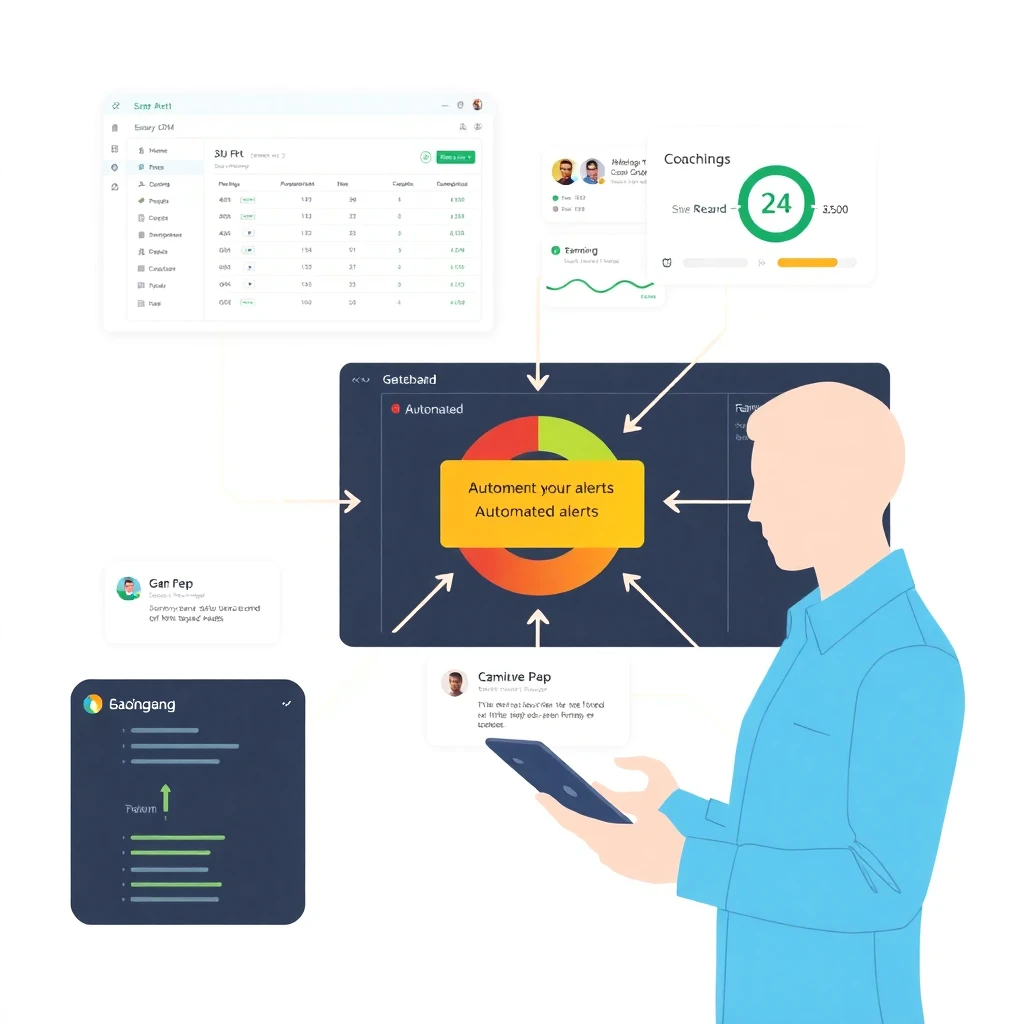
Gong's AI engine, often referred to as its "Revenue Intelligence Engine," employs a sophisticated blend of natural language processing (NLP), machine learning (ML), and deep learning techniques. For advanced users, this means not just understanding what was said, but how it was said, the context, and its likely impact on deal progression. The system identifies key topics, competitor mentions, buying signals, objections, and even the emotional tone of both the salesperson and the prospect. Furthermore, it tracks talk-to-listen ratios, question density, and the use of specific sales methodologies (e.g., MEDDIC, Challenger). The true power for advanced coaching lies in its ability to correlate these conversational elements with win rates, deal cycles, and revenue figures, providing a quantitative basis for coaching.
Core Capabilities: From Deal Intelligence to Persona-Based Insights
Gong's platform offers a suite of integrated capabilities that feed into its coaching recommendations. Deal Intelligence, for example, aggregates all interactions related to a specific opportunity, flagging at-risk deals based on conversational patterns (e.g., consistent pushback on pricing, lack of next steps). Persona-Based Insights allow you to tailor coaching based on the specific role or experience level of a sales rep, ensuring feedback is relevant and impactful. For a junior rep, the AI might focus on discovery questions; for a senior account executive, it might highlight negotiation tactics or executive presence. Moreover, features like "Smart Trackers" enable custom AI models to detect specific phrases or topics critical to your sales process, offering a granular level of analysis that can be directly tied to coaching objectives. As of 2026, Gong's predictive analytics have become highly refined, with modules that can forecast deal close probabilities with up to 90% accuracy, contingent on sufficient historical data and consistent data input.
Advanced Automation & Workflow Integration
The true scalability of Gong AI sales coaching comes from its ability to automate coaching triggers and integrate seamlessly with existing sales tech stacks. For power users, this involves setting up sophisticated rules and leveraging API access to create a proactive, rather than reactive, coaching environment. This eliminates the manual burden on sales managers, allowing them to focus on high-impact, personalized interventions.
Automating Coaching Triggers via CRM Sync
Integrating Gong directly with your CRM (e.g., Salesforce, HubSpot) is foundational. Advanced users can configure automated coaching triggers based on specific CRM data points combined with Gong's conversational insights. For instance, if a deal in Salesforce is marked "Stalled" and Gong detects a consistent pattern of the rep failing to ask about budget or timeline in recent calls, an automated coaching notification can be sent. Another powerful automation involves sentiment analysis: if a rep's average sentiment score in calls drops below a certain threshold for a week, an alert could be generated for their manager, prompting a check-in. This proactive approach ensures that coaching interventions occur precisely when and where they are most needed, preventing small issues from escalating into lost deals. You can configure these rules within Gong's "Coaching" and "Workflows" sections, specifying conditions based on call metrics, deal stages, and custom trackers.
API-Driven Data Extraction for Custom Analytics
For technical professionals, Gong's API opens a world of possibilities for custom analytics and integration. While Gong provides robust dashboards, the API allows you to extract raw or aggregated conversation intelligence data into external business intelligence (BI) tools (e.g., Tableau, Power BI) or data warehouses (e.g., Snowflake, BigQuery). This enables cross-referencing Gong data with other data sources like marketing attribution, product usage, or customer success metrics for a holistic view of the customer journey.
Example API Use Case: Identifying High-Impact Coaching Themes
- Extract Call Transcripts & Metrics: Use the Gong API to pull all call transcripts, speaker-specific metrics (talk time, monologue duration), and identified topics for a specific quarter.
- External NLP Analysis: Feed this data into a custom NLP model (e.g., using Python with spaCy or NLTK) to identify emerging themes or common phrases not natively tracked by Gong's Smart Trackers. For instance, you might discover that reps consistently struggle with a specific new product feature explanation.
- Correlate with CRM Data: Join this with CRM data (via API) to link specific conversational patterns to win rates, deal size, or customer churn.
- Automate Coaching Content Generation: Based on identified gaps, use a generative AI model (e.g., GPT-4o via API) to draft targeted coaching materials or battlecards for the sales team. For example, if reps are fumbling a new feature explanation, the AI could generate a concise, compelling script. This process can significantly accelerate the creation of hyper-relevant coaching resources, allowing for rapid adaptation to market changes or product updates.
Crafting Dynamic Playbooks with AI Feedback Loops
Gong's AI can go beyond mere reporting to actively influence and update sales playbooks. By integrating Gong's insights with a playbook management system (or even a shared knowledge base), you can create dynamic playbooks that evolve based on real-world performance. For instance, if Gong identifies that a particular objection handling technique consistently leads to higher conversion rates across the team, the AI can flag this as a best practice. Conversely, if a common sales pitch consistently results in stalled deals, the AI can recommend adjustments. This feedback loop can be automated:
- Gong identifies a high-performing call segment.
- API triggers an alert in a playbook system.
- A generative AI (e.g., Claude 3.5 Sonnet) analyzes the transcript of the high-performing segment and suggests an update to the relevant playbook section.
- A manager reviews and approves the AI-generated playbook update. This ensures playbooks are always fresh, relevant, and based on proven success, not just anecdotal evidence.
Mastering Advanced Prompting Strategies for Coaching
Advanced users leverage sophisticated prompting techniques to extract deeper, more nuanced coaching insights from Gong's AI. This moves beyond simply asking "What went well?" to orchestrating a multi-stage analysis that mimics a human coach's critical thinking process. Effective prompting requires understanding the AI's capabilities and structuring queries to elicit specific, actionable feedback.
Zero-Shot vs. Few-Shot Prompting for Situational Coaching
- Zero-Shot Prompting: This involves providing a clear, concise instruction to the AI without any examples. It's effective for general coaching questions.
- Example Prompt (Zero-Shot): "Analyze this sales call (ID: 12345) and identify three specific instances where the rep could have asked more open-ended discovery questions. For each instance, suggest an alternative question."
- Expected Output: The AI will directly apply its understanding of "open-ended discovery questions" to the transcript and provide specific timestamps and suggested alternatives.
- Few-Shot Prompting: Here, you provide the AI with a few examples of input-output pairs to guide its understanding of the desired response format or specific nuances. This is powerful for highly contextual or subjective coaching scenarios.
- Example Prompt (Few-Shot for Negotiation Coaching):
- Example 1 (Input): "Rep said: 'We can offer a 10% discount.' Prospect said: 'That's still too high.' Desired Coaching: Rep conceded too early. Should have tied discount to value or asked for something in return."
- Example 2 (Input): "Rep said: 'What's your budget?' Prospect said: 'We're flexible.' Desired Coaching: Rep missed opportunity to anchor value. Should have presented value proposition before asking budget."
- Your Call (Input): "Analyze Call ID: 67890. Identify any negotiation tactics used by the rep. Provide specific feedback on whether they were effective and suggest an alternative if not, following the format of the examples provided."
- Expected Output: The AI will analyze Call ID 67890, identify negotiation points, and structure its feedback using the pattern established in your examples, making the coaching more consistent and tailored to your specific methodology.
Chain-of-Thought Prompting for Deeper Root Cause Analysis
Chain-of-thought (CoT) prompting instructs the AI to "think step-by-step" before providing a final answer. This is invaluable for complex coaching scenarios where you need the AI to not just identify an issue, but also to reason through why it's an issue and how it impacts the deal.
Example CoT Prompt for Stalled Deal Analysis:
"Analyze Call ID: 54321, associated with a deal currently marked 'Stalled' in Salesforce.
Step 1: Identify all instances where the prospect expressed a clear pain point or business challenge. Extract these verbatim.
Step 2: For each pain point identified, assess if the rep effectively tied our solution's features/benefits directly to resolving that specific pain.
Step 3: If the rep failed to connect, explain why their response was insufficient and how it might contribute to the deal stalling.
Step 4: Based on the pain points and the rep's responses, suggest 2-3 actionable coaching points focused on improving value articulation and urgency creation for this specific deal."
By breaking down the analysis, you get a more transparent and robust coaching recommendation, revealing the AI's reasoning process and making its feedback more trustworthy and actionable. This approach allows you to prompt for "AI workflow audit" to continuously refine your coaching methodologies.
Integrating External Data for Contextualized Feedback
Gong's AI performs best when it has rich context. For advanced coaching, this means feeding it relevant external data. While Gong automatically pulls some CRM data, you can manually or programmatically add context.
- Pre-Call Briefings: Before a coaching session, summarize relevant account history, previous deal notes, or competitive intelligence from your knowledge base. Inject this into your prompt.
- Example: "Given this account's history of preferring competitor X due to cost concerns (see attached briefing doc), analyze Call ID: 98765. Did the rep effectively address potential cost objections? If so, how? If not, what specific phrases or strategies could they have used, considering the competitor context?"
- Product Updates: If there's a new product feature or pricing model, provide the AI with the updated information before asking it to analyze calls where these topics might come up.
- Example: "Our new 'Enterprise Pro' tier (details: [link to internal doc]) was launched last week. Analyze Call ID: 32109. Did the rep accurately and compellingly present the value of the 'Enterprise Pro' tier? Identify any misstatements or missed opportunities to highlight its benefits."
This integration of external, specific data points allows for highly contextualized and accurate coaching, moving beyond generic advice to hyper-personalized, situation-specific guidance.
Real-World Case Studies: Transforming Sales Teams with Gong AI
Implementing Gong AI sales coaching at an advanced level yields significant, measurable improvements across various aspects of sales performance. These case studies highlight how organizations leverage Gong's capabilities to solve complex sales challenges. According to a Gartner report on sales technology trends, enterprises adopting advanced AI coaching platforms report up to a 25% improvement in sales productivity and a 15% increase in win rates by 2026.
Case Study 1: Accelerating Onboarding for New Reps
A global SaaS company faced a challenge with new sales reps taking 6-9 months to reach full productivity. They implemented an advanced Gong AI coaching program.
- Baseline Analysis: Gong's AI analyzed calls from top-performing senior reps to identify key conversational patterns, discovery questions, and objection handling techniques.
- Automated Micro-Coaching: New reps were assigned an AI-driven coaching plan. After each call, Gong's AI automatically provided feedback on specific metrics (talk-to-listen ratio, filler words, question density) and highlighted moments where they deviated from top-performer patterns, suggesting specific call snippets from successful reps as examples.
- Manager Focus: Managers received AI-generated summaries of rep performance, highlighting areas of consistent struggle across the onboarding cohort. This allowed them to prioritize 1:1 coaching sessions on high-impact areas, rather than reviewing every call. Result: The average time to full productivity was reduced to 4 months, representing a 33-55% improvement. New reps felt more supported, receiving immediate, objective feedback that accelerated their learning curve.
Case Study 2: Optimizing Deal Progression in Complex Sales Cycles
A B2B enterprise software vendor struggled with long sales cycles and deals frequently stalling in the mid-stage. They deployed Gong AI with a focus on deal progression.
- Stalled Deal Identification: Automated workflows were configured to alert managers when Gong detected specific patterns in calls associated with stalled deals:
- Lack of clear next steps agreed upon.
- Consistent "think it over" responses from prospects.
- Absence of executive-level engagement.
- Rep failing to re-confirm pain points in subsequent calls.
- AI-Driven Root Cause Analysis: For each flagged deal, Gong's AI provided a summary of potential root causes based on conversational analysis. For example, "Rep failed to uncover true business impact during discovery, leading to a weak value proposition in subsequent calls."
- Targeted Coaching & Playbook Updates: Managers used these insights for highly specific coaching. The AI also identified that reps were consistently failing to articulate the ROI of a specific feature. This led to an AI-generated update to the sales playbook, including a new ROI calculator script. Result: Sales cycle duration was reduced by 18%, and the percentage of deals successfully moving from mid-stage to late-stage increased by 22%. This was achieved by providing reps with precise, data-backed guidance at critical junctures.
Case Study 3: Refining Objection Handling at Scale
A fast-growing fintech company with hundreds of sales development representatives (SDRs) needed to standardize and improve their objection handling, particularly around pricing and security concerns.
- Custom Smart Trackers: They configured Gong's Smart Trackers to identify specific pricing and security objections, as well as the reps' responses.
- Performance Benchmarking: Gong's AI analyzed hundreds of calls to identify the most effective (and least effective) responses to each objection, correlating them with successful call outcomes (e.g., booked meetings, qualified leads).
- Automated Feedback Loops: SDRs received instant, automated feedback after calls where specific objections were identified. If their response was suboptimal, Gong would highlight a 'best practice' response from a top performer's call.
- Gamification: A leaderboard, powered by Gong's data, tracked which SDRs were most effectively handling key objections, fostering healthy competition. Result: The average conversion rate for calls encountering pricing objections increased by 11%, and for security objections by 9%. The overall quality of initial qualification calls improved significantly, leading to a higher quality pipeline for account executives.
Overcoming Implementation Challenges & Common Pitfalls
While Gong AI sales coaching offers immense potential, advanced users must navigate common challenges to ensure successful implementation and sustained value. Ignoring these pitfalls can lead to underutilization, frustration, or even negative impacts on rep morale.
Data Quality and Privacy Considerations
The accuracy of Gong's AI is directly proportional to the quality of the data it receives.
- Poor Audio Quality: Calls with background noise, poor microphone quality, or overlapping speech will result in inaccurate transcripts and flawed AI analysis. Ensure reps use high-quality headsets and conduct calls in quiet environments.
- Incomplete CRM Data: If CRM fields are not consistently updated, Gong's ability to correlate conversational insights with deal stages, customer segments, or product interests will be hampered. Enforce strict CRM hygiene.
- Privacy & Compliance: Ensure your organization is fully compliant with all relevant data privacy regulations (e.g., GDPR, CCPA) regarding call recording and AI analysis. Transparency with reps and customers about recording practices is crucial for trust. It's important to differentiate "as of 2026" facts about compliance from evergreen legal requirements.
Avoiding "Analysis Paralysis" with Too Much Data
Gong generates a vast amount of data. A common pitfall for advanced users is getting overwhelmed or focusing on too many metrics simultaneously.
- Lack of Clear Objectives: Without specific coaching objectives (e.g., "improve discovery questions," "reduce monologue time"), managers can get lost in the data. Define 1-2 key metrics or behaviors to focus on for a given period.
- Over-reliance on Scores: While Gong provides useful scores (e.g., sentiment, talk-to-listen), relying solely on these without listening to call snippets can lead to misinterpretations. Always use scores as indicators for deeper investigation.
- Ignoring Human Context: AI provides objective data, but human coaching requires empathy and understanding of individual rep circumstances. The AI augments, it doesn't replace, the manager's qualitative assessment.
Ensuring Adoption and Sustained Engagement
The most sophisticated AI coaching system is useless if reps and managers don't adopt it.
- Lack of Training: Provide thorough training for both reps on how to interpret and act on AI feedback, and for managers on how to effectively use Gong's coaching features.
- Fear of Surveillance: Address concerns about "big brother" by clearly communicating the purpose of Gong – it's a coaching tool, not a monitoring tool. Emphasize its role in personal and team development.
- Inconsistent Application: If managers don't consistently use Gong for coaching, reps will quickly deprioritize the feedback. Integrate Gong into regular 1:1s and team meetings.
- One-Way Feedback: Encourage reps to use Gong to self-coach and identify their own areas for improvement, creating a culture of proactive development. This aligns with "prompt frameworks for Sales Professionals" by empowering them to derive their own insights.
Future-Proofing Your Sales Coaching Strategy
The landscape of AI in sales is rapidly evolving, and future-proofing your Gong AI sales coaching strategy means staying abreast of emerging capabilities, optimizing integrations, and understanding the enduring role of human leadership. Gong stands out as the premier conversation intelligence platform for sales coaching, continuously innovating its AI capabilities.
Emerging AI Capabilities in Conversation Intelligence (2026 focus)
By 2026, expect Gong's AI to offer even more sophisticated predictive and prescriptive analytics.
- Hyper-Personalized Learning Paths: AI will generate dynamic, individualized learning modules for reps based on their real-time performance and identified skill gaps. For instance, if a rep consistently struggles with "value proposition articulation," the AI might recommend specific micro-learning content or practice scenarios.
- Generative AI for Role-Playing: Advanced generative AI models will enable reps to practice difficult conversations (e.g., objection handling, negotiation) with AI-powered personas that realistically simulate prospect behavior, providing immediate feedback on their performance.
- Proactive Intervention Suggestions: Beyond flagging issues, Gong's AI could proactively suggest specific messaging or strategies during a live call to help reps navigate challenging situations, potentially via discreet in-call prompts (though this raises interesting ethical and practical considerations for rep adoption).
- Multi-Channel Analysis: Expect deeper integration and analysis across more communication channels—email, chat, video conferencing—providing a truly holistic view of customer interactions.
Integrating with Broader Sales Tech Stacks (API focus)
The future of sales coaching lies in a tightly integrated tech ecosystem. Power users will continue to leverage Gong's API to:
- Orchestrate Complex Workflows: Beyond CRM, integrate Gong with sales engagement platforms (e.g., Salesloft, Outreach) to optimize email sequences based on call insights, or with learning management systems (LMS) to automatically assign training modules.
- Unified Data Lakes: Feed Gong data into enterprise data lakes alongside product usage, marketing campaign performance, and customer success interactions. This enables advanced data science teams to build custom models for predicting churn, identifying upsell opportunities, and optimizing the entire revenue funnel.
- AI-Powered Sales Assist Tools: Integrate Gong's real-time insights with AI-powered sales assist tools that provide reps with relevant information (e.g., competitor battlecards, product FAQs) during live calls, enhancing their ability to respond effectively.
The Human Element: When AI Augments, Not Replaces
Despite the advancements in AI, the human element in sales coaching remains paramount. AI is a powerful augmentative tool, not a replacement for human leadership, empathy, and strategic guidance.
- Strategic Coaching: Managers will shift from tactical call reviews to strategic coaching, focusing on career development, complex problem-solving, and fostering a high-performance culture.
- Emotional Intelligence: AI excels at pattern recognition but lacks emotional intelligence. Managers provide the crucial human touch, understanding rep motivations, addressing morale, and building trust.
- Customized Development: While AI can identify skill gaps, a human coach can tailor development plans to individual learning styles, career aspirations, and personal strengths.
- Ethical Oversight: Managers will play a critical role in overseeing the ethical use of AI, ensuring fairness, preventing bias, and maintaining a positive, supportive coaching environment.
Gong AI sales coaching, when implemented with an advanced, strategic approach, fundamentally redefines how sales teams learn, grow, and perform. It empowers organizations to scale best practices, personalize development, and ultimately, drive superior revenue outcomes by transforming raw conversation data into actionable intelligence. For advanced users, leveraging its API capabilities and mastering sophisticated prompting strategies will be key to unlocking its full potential. To explore detailed pricing and advanced feature tiers, consult Gong's official pricing page.
Next Steps
Begin by auditing your current sales coaching workflows to identify 1-2 key areas where data-driven insights from Gong could provide immediate, measurable impact. Focus on areas like discovery call quality or objection handling.
Frequently Asked Questions
How does Gong's AI handle complex, multi-party sales calls?
Gong's AI differentiates multiple speakers, assigning labels and tracking individual contributions, talk times, and sentiment for nuanced analysis in complex calls.
What are the key ethical considerations when using Gong AI for sales coaching?
Ethical considerations include data privacy compliance, transparency with reps and prospects about recording, avoiding algorithmic bias, and preventing the perception of surveillance by using it as a development tool.
Can Gong AI integrate with custom CRM fields for more tailored insights?
Yes, Gong integrates with custom CRM fields, allowing you to enrich its analysis with unique business data points for highly tailored coaching triggers and reports specific to your sales methodology.
What's the typical ROI for advanced Gong AI sales coaching implementations?
Advanced Gong AI implementations typically yield significant ROI, including 10-20% reduced sales cycle times, 5-15% increased win rates, and 30-50% faster rep onboarding, alongside manager efficiency gains.
How can I ensure sales reps adopt and value AI-driven coaching feedback?
Ensure adoption by clearly communicating the benefits, providing comprehensive training, integrating Gong into existing workflows, encouraging self-coaching, and positioning it as a supportive tool for growth.
What specific API capabilities does Gong offer for advanced users?
Gong's API allows extraction of call metadata, transcripts, topics, and speaker analytics. It also supports pushing data into Gong, user management, and programmatic workflow configuration for custom integrations.