
Accelerate Medical Literature Reviews with Elicit & Scite: AI Literature Review: Elicit and Scite_ offer a transformative approach for Healthcare Professionals seeking to streamline the often-arduous process of medical literature review and evidence synthesis. Imagine reducing weeks of manual screening and data extraction into a few focused hours, allowing you to spend more time on patient care, clinical research, or guideline development. This guide will walk you through practical, step-by-step workflows using these advanced AI tools to accelerate your research, enhance the quality of your evidence synthesis, and ultimately, inform better clinical decisions.
Why AI-Powered Literature Review Matters Now for HCPs

The sheer volume of new medical literature published daily presents a significant challenge for Healthcare Professionals. PubMed alone adds millions of articles annually, making it nearly impossible to stay current, let alone conduct comprehensive systematic reviews or meta-analyses manually. Traditional literature review processes are resource-intensive, demanding extensive time, multiple reviewers, and meticulous data extraction. This bottleneck directly impacts the speed at which new evidence can be incorporated into clinical practice, guideline updates, and policy decisions.
As of 2026, the imperative for efficiency and accuracy in evidence synthesis is paramount. AI tools are no longer experimental; they are becoming indispensable for managing this information overload. They offer a tangible solution to accelerate the identification of relevant studies, extract key data points, and identify the impact and reliability of research findings. For a busy clinician evaluating a new treatment protocol, or a researcher embarking on a grant proposal, the ability to quickly synthesize the current state of evidence can mean the difference between timely innovation and falling behind. The integration of AI in this domain is not just about speed; it's about enhancing the rigor and reproducibility of your research, freeing up valuable human expertise for critical analysis and interpretation rather than tedious manual labor.
The Evidence Synthesis Framework for AI Integration
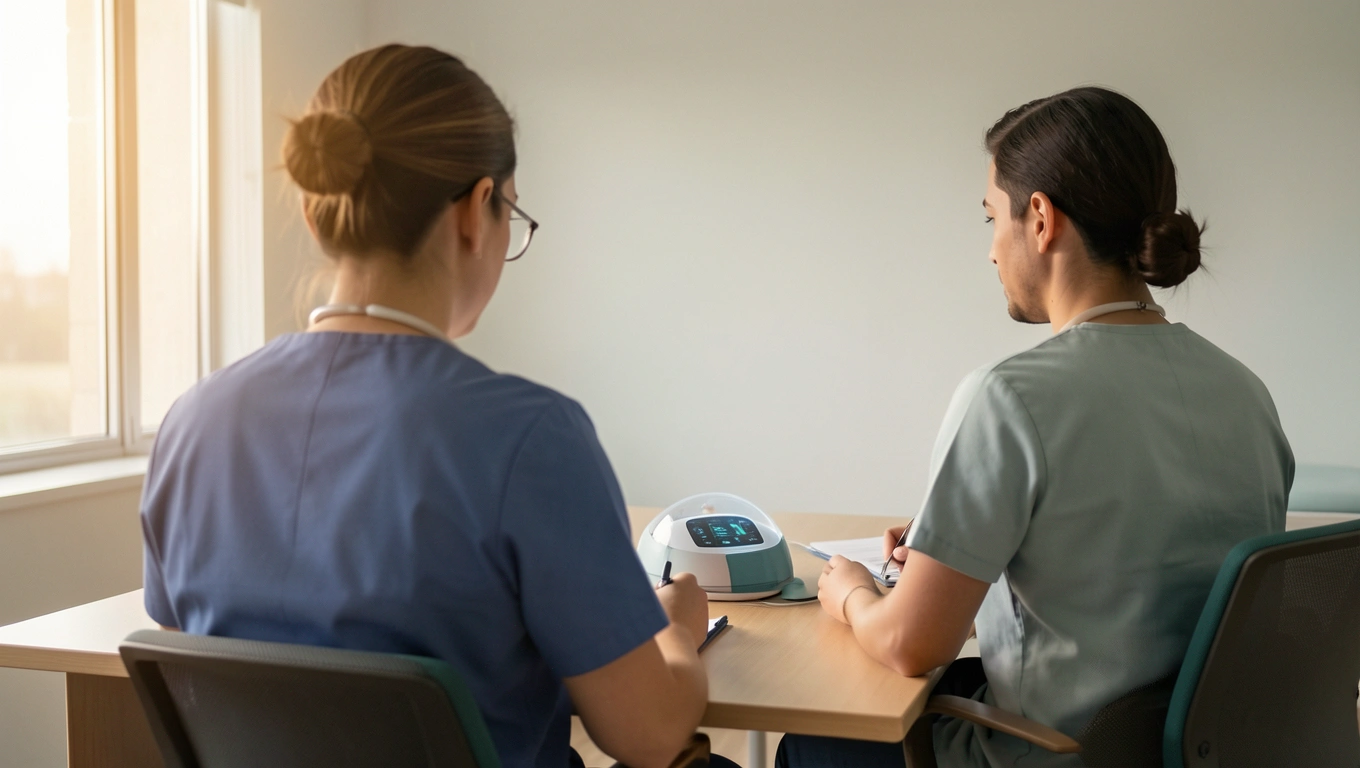
Integrating AI into medical literature review requires a structured approach, moving beyond simply "using a tool" to adopting a strategic framework. This framework ensures that AI augments, rather than replaces, critical human judgment throughout the evidence synthesis process. It involves a shift in mindset from manual execution to intelligent oversight, where you direct the AI, validate its outputs, and interpret the synthesized information.
The core of this framework centers on a cyclical process: Define, Discover, Distill, Validate, and Synthesize. Each stage leverages specific AI capabilities to enhance efficiency and accuracy.
- Define: Clearly articulate your research question, PICO (Population, Intervention, Comparator, Outcome) elements, and inclusion/exclusion criteria. This initial human-led step is crucial; AI cannot compensate for a poorly defined question.
- Discover: Employ AI-powered search and screening tools like Elicit to rapidly identify potentially relevant studies from massive databases. This phase focuses on casting a wide net and then quickly narrowing it down.
- Distill: Use AI for automated data extraction of key information (e.g., study design, sample size, primary outcomes) from selected articles. Tools like Elicit excel here, presenting findings in structured tables.
- Validate: Critically appraise the quality and risk of bias of the extracted evidence. This is where tools like Scite_ become invaluable, providing insights into how studies have been cited and whether their claims have been supported or contradicted. Human expert review remains paramount in this stage, using AI as an intelligent assistant.
- Synthesize: Integrate the validated evidence to answer your research question, identify gaps, and formulate conclusions. AI can assist in summarizing findings and generating initial drafts of evidence tables or narrative sections, but the final analytical interpretation rests with the HCP.
💡 Tip: Before initiating any AI-assisted review, conduct a small, manual pilot review of 10-20 articles. This helps refine your PICO question and inclusion criteria, ensuring the AI is trained on precise parameters and reducing irrelevant outputs.
This framework allows you to maintain control over the scientific rigor while significantly offloading the repetitive, time-consuming tasks to AI. It’s about leveraging the strengths of both human intelligence and artificial intelligence to achieve a more efficient and robust evidence synthesis.
Core Workflows: Elicit and Scite_ in Action

Mastering Elicit and Scite_ individually and in combination can dramatically accelerate your medical literature reviews. These tools address different, yet complementary, stages of evidence synthesis, making them a powerful duo for Healthcare Professionals.
Workflow 1: Rapid Screening and Data Extraction with Elicit
Elicit, as of 2026, is a research assistant that uses language models to automate parts of the literature review process. It's particularly strong for initial screening, identifying key information, and organizing findings. Elicit's underlying models, like GPT-4, allow it to understand natural language queries and extract structured data from scientific papers. For a detailed overview of its capabilities, refer to Elicit's official documentation.
Step-by-Step Procedure:
- Formulate Your Research Question: Begin with a clear, focused research question. For example: "What is the efficacy of GLP-1 receptor agonists in reducing cardiovascular events in patients with type 2 diabetes?"
- Input Your Query into Elicit: Navigate to the Elicit homepage. Enter your research question directly into the search bar. Elicit excels with natural language queries; phrase it as you would ask a colleague.
- Initial Search and Filtering: Elicit will return a list of top-matching papers. On the left sidebar, you can apply filters for publication year (e.g., "published after 2020" for recent evidence), study type (e.g., "RCT," "Systematic Review"), and even specific outcomes or populations. This initial filtering is critical for narrowing down thousands of results to a manageable set.
- Automated Key Information Extraction: For each paper, Elicit automatically extracts and displays key information in a tabular format. Common columns include "Intervention," "Outcome," "Sample Size," and "Conclusion." You can add custom columns relevant to your PICO question, such as "Patient Population Characteristics" or "Adverse Events." Elicit will then attempt to extract this specific data across all selected papers.
- Example: If you add a custom column "HbA1c Reduction," Elicit will scan the full text of the papers and populate this data point where available.
- Review and Refine Extracted Data: While Elicit is highly accurate, always review the extracted information. Click on a paper title to open its abstract or full text (if available and linked), verifying that the extracted data aligns with the source. You can manually edit any cell in the Elicit table to correct or add details.
- Export Findings: Once satisfied with your extracted data, you can export the table as a CSV or BibTeX file. This structured data is ready for further analysis, inclusion in your evidence tables, or import into other tools.
Workflow 2: Citation Context and Claim Validation with Scite_
Scite_ is a powerful tool that uses "smart citations" to show how research has been cited by others. It categorizes citations as supporting, mentioning, or contrasting, offering a nuanced view of a study's impact and reliability. This is invaluable for critically appraising evidence, a crucial step in evidence synthesis.
Step-by-Step Procedure:
- Identify Key Studies from Elicit: After your initial screening and data extraction in Elicit, you'll have a list of core papers. Select the most impactful or controversial studies you need to validate further.
- Search for Papers in Scite_: Go to the Scite_ platform. Enter the DOI, PubMed ID, or title of a paper you want to analyze.
- Analyze Smart Citations: Scite_ will display a "Citation Statement" view, showing snippets of text from other papers that cited your target article. Each snippet is categorized:
- Supporting: Indicates the citing paper agrees with or builds upon the target paper's findings.
- Mentioning: Refers to the paper without explicitly supporting or contradicting it.
- Contrasting: Suggests the citing paper disagrees with or provides evidence against the target paper's claims.
- Evaluate Claim Strength: Pay close attention to the number of supporting vs. contrasting citations. A paper with numerous contrasting citations might warrant closer scrutiny, or its findings may have been superseded or challenged by newer evidence. This helps you assess the robustness of a study's claims.
- Example: If a clinical trial from 2020 claims a certain drug is highly effective, but Scite_ reveals 5 newer systematic reviews from 2024-2026 that contradict or significantly qualify that claim, you immediately know to prioritize the newer, more comprehensive evidence.
- Explore Citing Articles: Click on any citation statement to view the full abstract or paper of the citing article. This allows you to quickly dive deeper into the context and understand why a paper was supported or contradicted. This is particularly useful for identifying follow-up studies or meta-analyses.
- Create a Custom Report: Scite_ allows you to create custom dashboards or reports for a collection of papers. This is useful for tracking the citation landscape of a specific topic or a set of studies relevant to your review.
Workflow 3: Combined Elicit and Scite_ for Comprehensive Evidence Synthesis
The true power emerges when Elicit and Scite_ are used in tandem. This integrated workflow allows for rapid identification, structured extraction, and robust validation.
Step-by-Step Procedure:
- Initial Discovery and Extraction (Elicit):
- Start in Elicit with your PICO question (e.g., "Effectiveness of telemedicine for managing chronic heart failure in elderly patients").
- Screen and filter studies, focusing on relevant study designs (RCTs, systematic reviews).
- Extract key data points into Elicit's tabular format (e.g., patient demographics, intervention type, primary outcome measures, follow-up period).
- Export the refined list of top 20-50 relevant papers, including DOIs, from Elicit as a CSV.
- Citation Contextualization (Scite_):
- Import the DOIs from your Elicit export into Scite_ (you can often paste a list of DOIs directly).
- For each paper, analyze its smart citations. Prioritize papers with strong supporting evidence and critically examine those with significant contrasting citations.
- Identify any major systematic reviews or meta-analyses that have cited your Elicit-identified papers. These often represent a higher level of evidence and can help you quickly consolidate findings.
- Iterative Refinement and Quality Appraisal:
- Return to Elicit with insights from Scite_. If Scite_ indicated a paper's findings are heavily challenged, you might adjust its weighting in your Elicit table or flag it for closer manual review.
- Use Scite_'s insights to inform your risk of bias assessment. A paper frequently contradicted might suggest methodological issues or findings that haven't been replicated.
- Conversely, if Elicit identified a highly relevant paper that Scite_ shows is foundational and widely supported, you can confidently include it.
- Synthesize Findings:
- Combine the structured data from Elicit with the citation context from Scite_ to build your evidence tables.
- Use Elicit's summarization features to draft initial sections of your review, then enrich these drafts with the critical appraisal gained from Scite_'s smart citations.
- The combination allows you to not only say "what the paper found" (Elicit) but also "how reliable and impactful that finding is in the broader scientific community" (Scite_).
This combined approach is ideal for busy HCPs, enabling a rapid yet robust evidence synthesis process that would otherwise take weeks or months.
Overcoming Common Pitfalls in AI-Assisted Reviews
While Elicit and Scite_ offer immense advantages, Healthcare Professionals must be aware of potential pitfalls to ensure the accuracy and integrity of their literature reviews. Mitigating these common issues is crucial for maintaining scientific rigor.
Pitfall 1: Over-Reliance on Initial AI Outputs Without Verification
AI tools are powerful, but they are not infallible. Elicit's extraction capabilities, while advanced, can sometimes misinterpret nuanced language, miss specific data points, or present information out of context. Relying solely on the AI's first pass without human verification is a significant risk.
Specific Fix: Always perform a critical manual review of the AI-extracted data. For every key data point Elicit extracts (e.g., patient count, specific outcome measures), click through to the source document (abstract or full text) and confirm its accuracy. Treat Elicit's output as a highly efficient first draft, not the final word. Implement a double-check system, especially for high-stakes reviews like systematic reviews for clinical guidelines.
Pitfall 2: Neglecting the "Garbage In, Garbage Out" Principle
The quality of AI output is directly tied to the quality and specificity of your input queries and filters. Vague research questions or broad inclusion criteria will lead to irrelevant results, wasting your time in subsequent filtering and validation stages.
Specific Fix: Invest significant time upfront in clearly defining your PICO question and detailed inclusion/exclusion criteria. Use precise keywords and Boolean operators (if supported by the tool's advanced search) when formulating your Elicit queries. Regularly refine your filters as you review initial results. For example, instead of "diabetes drugs," specify "GLP-1 receptor agonists for type 2 diabetes with established cardiovascular disease."
Pitfall 3: Misinterpreting Citation Context or Overlooking Nuance
Scite_'s smart citations are incredibly helpful but require careful interpretation. A "contrasting" citation doesn't automatically invalidate a study; it might simply offer an alternative perspective, point to limitations, or refer to a different patient population. Similarly, a "supporting" citation might come from a less rigorous study.
Specific Fix: Don't just count supporting vs. contrasting citations. Read the actual citation statements provided by Scite_. Understand the context in which the paper was cited. Prioritize citations from high-quality sources (e.g., systematic reviews, meta-analyses, large RCTs) when assessing impact. If a paper has many "contrasting" citations, investigate why they contrast. It could be due to evolving evidence, different methodologies, or specific population differences.
Pitfall 4: Lack of Reproducibility in AI-Assisted Workflows
One of the strengths of systematic reviews is their reproducibility. If your AI workflow isn't documented, repeating the process or having another reviewer verify your steps becomes challenging. This can undermine the scientific integrity of your review.
Specific Fix: Document your AI workflow meticulously. Record the exact search queries used in Elicit, the filters applied, the date of the search, and the number of articles screened. For Scite_, note the DOIs analyzed and any specific insights gained. Many AI tools allow you to save your search parameters; utilize these features. Consider creating a simple log or protocol in a shared document (e.g., Notion, Google Docs) outlining each step of your AI-assisted process.
Pitfall 5: Ignoring Ethical Considerations and Bias
AI models are trained on vast datasets, and if these datasets contain biases (e.g., underrepresentation of certain patient populations, overrepresentation of specific research areas), the AI's outputs may inadvertently reflect or amplify these biases.
Specific Fix: Be aware of potential biases in the literature itself and how AI might surface or obscure them. For example, if Elicit primarily surfaces studies from Western populations, actively seek out and filter for research from diverse geographical regions or patient demographics. When interpreting Scite_ results, consider if certain research areas or authors receive disproportionate attention. Always maintain a critical lens, recognizing that AI is a tool, and human ethical oversight is irreplaceable.
By proactively addressing these pitfalls, Healthcare Professionals can harness the full power of Elicit and Scite_ to conduct more efficient, robust, and reliable medical literature reviews.
Building Your AI Literature Review Stack: Tools and Tiers
Integrating Elicit and Scite_ effectively means understanding their pricing structures, feature sets, and how they fit into a broader research ecosystem. As of 2026, both tools offer various tiers designed to meet different needs, from individual researchers to large institutional teams.
Elicit: Your AI Research Assistant
Elicit is primarily designed for discovering relevant papers, extracting data, and summarizing findings. It operates on a credit-based system for certain advanced operations, such as full-text extraction or generating comprehensive summaries.
- Free Tier: Offers a limited number of credits per month (e.g., 50 credits/month as of 2026). This tier is ideal for individual researchers conducting small-scale reviews or exploring the tool's capabilities. It typically includes basic search, abstract summarization, and limited data extraction.
- Plus Plan: Priced at approximately $10-$20/month, billed annually (exact pricing varies as of 2026). This plan usually significantly increases monthly credits (e.g., 500+ credits/month) and unlocks more advanced features like unlimited custom column extraction, full-text PDF analysis (where accessible), and priority support. This is suitable for active researchers, residents, or fellows conducting multiple reviews.
- Institutional/Enterprise Plan: Custom pricing, often on a per-seat/year basis. These plans provide unlimited credits, dedicated account management, single sign-on (SSO) integration, and potentially API access for integrating Elicit's capabilities into custom research platforms. This tier is for academic institutions, hospitals, or pharmaceutical companies with large research departments.
Key Features to Note (Elicit, 2026):
- Natural Language Search: Accurately understands complex research questions.
- Automated Data Extraction: Extracts PICO elements, outcomes, and study designs into structured tables.
- PDF Upload & Analysis: Upload your own PDFs for extraction and summarization.
- Synthesis Features: Generates summaries of extracted data and identifies common themes.
- Integration: Export to CSV, BibTeX, and often direct integrations with reference managers are evolving.
Scite_: The Smart Citation Platform
Scite_ focuses on providing citation context and evaluating the reliability of research claims. Its core value lies in showing how papers have been cited, rather than just that they have been cited.
- Free Tier: Offers limited access to smart citations (e.g., viewing citation statements for a few papers per day) and basic search functionality. This is useful for quick checks on individual papers.
- Premium Plan (Individual): Approximately $20-$30/month, billed annually (exact pricing varies as of 2026). This tier provides unlimited smart citation views, full access to custom reports, and enhanced search filters. It is ideal for active academic researchers, PhD students, or clinicians who frequently need to validate evidence.
- Institutional/Enterprise Plan: Custom pricing, often on a per-user/year or site-license basis. These plans include unlimited access for all users within an institution, administrative dashboards, and often integration with institutional library systems. This is the best fit for universities, research hospitals, and large corporations.
Key Features to Note (Scite_, 2026):
- Smart Citations: Categorizes citations as supporting, mentioning, or contrasting.
- Citation Statements: Shows snippets of text from citing articles to provide context.
- Reference Checks: Quickly identifies if a paper's claims have been supported or contradicted.
- Dashboard & Reports: Create custom collections of papers and analyze their citation trends.
- Browser Extension: Seamlessly check Scite_ data while browsing PubMed or other databases.
Complementary Tools in Your Stack
While Elicit and Scite_ are central, a complete AI literature review stack often benefits from other tools:
- Reference Managers (e.g., Zotero, EndNote, Mendeley): Essential for organizing your collected papers, generating bibliographies, and integrating with your writing process. Elicit often exports BibTeX files compatible with these.
- AI Writing Assistants (e.g., ChatGPT, Claude): For drafting sections of your review, refining language, or brainstorming. While not for evidence synthesis itself, they can accelerate the writing phase once evidence is synthesized.
- Risk of Bias Assessment Tools (e.g., RevMan for Cochrane reviews): While AI can inform bias assessment (e.g., Scite_'s insights), dedicated tools are still crucial for systematic and rigorous evaluation of study quality.
- Data Visualization Tools (e.g., Tableau, Power BI): To visually represent findings from your extracted data, especially for meta-analyses or large datasets.
🎯 Pro move: For institutional users, explore whether your library already subscribes to an enterprise license for Scite_ or Elicit. Many academic and medical libraries are adopting these tools, which could provide you with full access without individual subscription costs. Check your institutional resources portal.
When selecting your stack, consider your specific needs, the volume of literature you process, and your budget. For most Healthcare Professionals regularly conducting literature reviews, a combination of Elicit's Plus Plan and Scite_'s Premium Plan offers the most robust and cost-effective solution for accelerating evidence synthesis as of 2026.
| Feature | Elicit (Plus Plan) | Scite_ (Premium Plan) |
|---|---|---|
| Primary Function | Search, data extraction, summary | Citation context, claim validation |
| Pricing (approx. 2026) | $15/month, billed annually | $25/month, billed annually |
| Free tier | Yes, ~50 credits/month | Yes, limited access |
| Best for | Initial screening, structured data extraction | Critical appraisal, identifying conflicting evidence |
| Key Output | CSV/BibTeX tables, summaries | Smart citation reports, citation statements |
| Learning Curve | Moderate | Low |
| Catch | Credits for advanced features | Focuses solely on citations, not initial discovery |
Your Next Step in AI-Accelerated Evidence Synthesis
The journey to AI-accelerated evidence synthesis begins with a single, concrete action. Your immediate next step should be to explore Elicit's free tier. Visit Elicit's website and sign up for a free account. Input a specific PICO question from a recent clinical case or research interest you have. Spend 30 minutes experimenting with its search filters and data extraction capabilities. Observe how quickly it can surface relevant papers and organize key information. This hands-on experience will provide invaluable insight into how these tools can fit directly into your Monday morning workflow, transforming your approach to medical literature reviews.
Frequently Asked Questions
How accurate are AI tools like Elicit for data extraction?
Elicit is highly accurate for extracting common data points from abstracts and full texts, but accuracy can vary with text complexity. Always manually verify critical data, especially for quantitative results or nuanced findings, as AI outputs should be treated as a highly efficient first draft.
Can Scite_ replace traditional peer review or risk of bias assessment?
No, Scite_ enhances these processes by providing transparent citation context, offering valuable signals about how a study's claims are perceived by the scientific community. However, it does not replace the need for human judgment and rigorous critical appraisal or risk of bias assessment.
Are these AI tools HIPAA compliant for handling patient data?
Neither Elicit nor Scite_ are designed for direct handling of identifiable patient data; they process publicly available scientific literature. For internal, de-identified patient record data, ensure you use tools and platforms with explicit HIPAA compliance and robust data security measures.
What if I don't have access to full-text articles through Elicit?
Elicit primarily works with publicly available abstracts and open-access full texts. For paywalled articles, you will need to use your institutional library's access or other subscription services to obtain the full text, which can then often be uploaded directly to Elicit for analysis.
How do Elicit and Scite_ handle preprints?
Both Elicit and Scite_ may include preprints, but it's crucial to exercise caution as preprints have not undergone formal peer review. They should be treated as preliminary research, and both platforms often differentiate them or focus on published literature unless specifically requested.