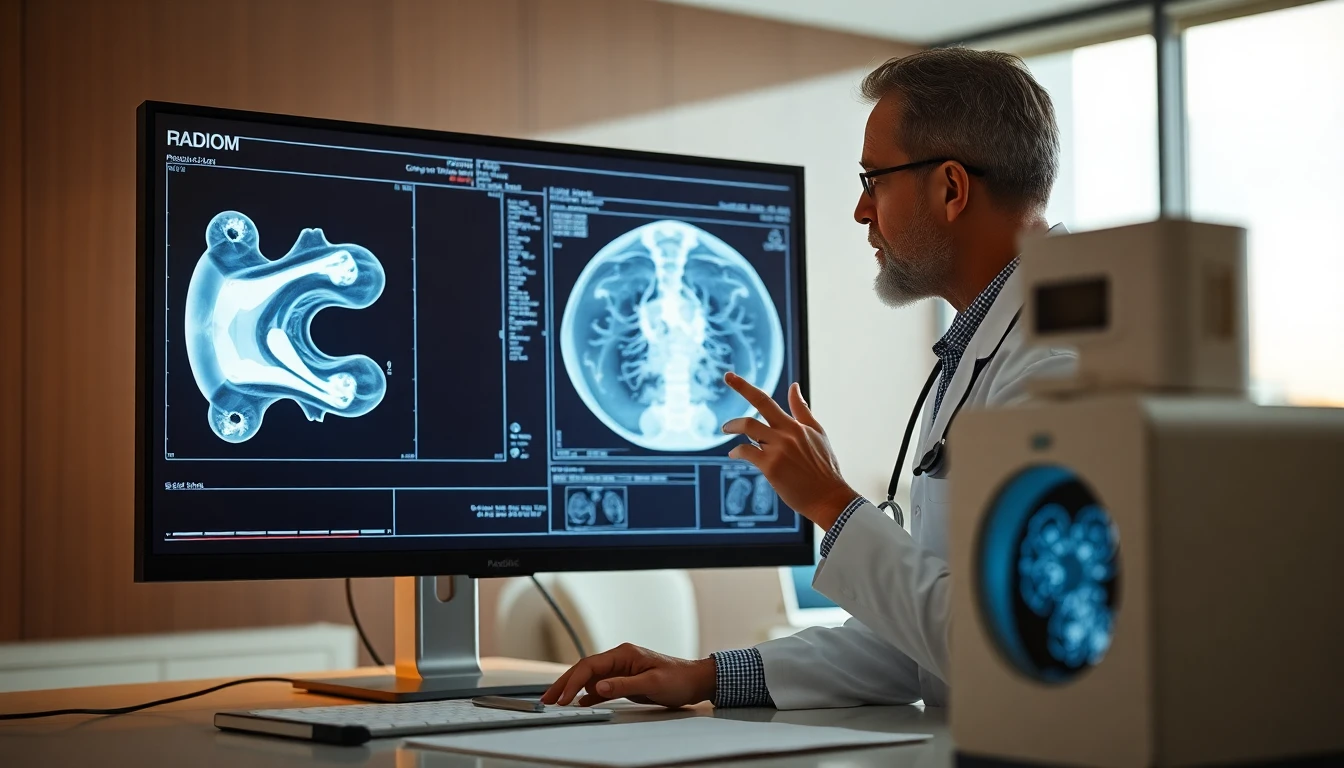
AI-Assisted Diagnostic Tools Comparison 2026: Accelerate Accurate Patient Triage & Treatment Plans
The urgent need for faster, more accurate patient triage and precise treatment plans drives innovation in healthcare. AI diagnostic tools, leveraging advancements in machine learning and natural language processing, offer a pathway to significantly enhance clinical workflows by 2026. Healthcare Professionals face a critical decision: which AI-driven diagnostic approach best integrates into existing systems and delivers tangible patient benefits? This article compares two primary paradigms—AI-powered image analysis and LLM-driven clinical reasoning—to guide your strategic adoption.
TL;DR: Choosing Your AI Diagnostic Co-pilot by Clinical Goal

Selecting the optimal AI diagnostic solution depends heavily on your primary clinical objective and existing data infrastructure. For specialties heavily reliant on visual data, such as radiology, pathology, or dermatology, AI-powered image analysis tools offer unparalleled precision in detecting subtle patterns and anomalies. These systems excel at quantifying disease progression, identifying early markers, and streamlining high-volume screening tasks, directly impacting diagnostic throughput. Consider solutions like Google Health AI's imaging suite or NVIDIA Clara for their robust capabilities in this domain Source: Official product documentation.
Conversely, if your workflow involves extensive unstructured text data—patient histories, clinical notes, discharge summaries, or research literature—Large Language Model (LLM)-driven clinical reasoning tools provide a powerful augmentation. These platforms assist with differential diagnosis generation, treatment plan synthesis, risk stratification, and even patient communication, by processing and synthesizing complex textual information. For emergency departments or primary care settings where rapid interpretation of diverse data points is crucial, LLM-based systems can act as an invaluable second opinion, reducing cognitive load and accelerating decision-making. The choice is not necessarily binary; many advanced clinical settings will benefit from integrating both approaches to achieve a holistic AI diagnostic ecosystem.
Essential Criteria for Evaluating AI Diagnostic Solutions

When considering AI diagnostic tools, Healthcare Professionals must look beyond headline features to assess core capabilities that directly impact patient care and operational efficiency. The landscape by 2026 demands rigorous evaluation across several axes, including data integration, regulatory compliance, model explainability, and the practical learning curve for clinical staff. A superficial assessment can lead to costly implementation failures and erode clinical trust.
Data Integration & Interoperability: A critical factor is how seamlessly the AI solution connects with existing Electronic Health Records (EHR), Picture Archiving and Communication Systems (PACS), Radiology Information Systems (RIS), and Laboratory Information Systems (LIS). Tools that require extensive manual data input or operate in isolated silos introduce significant workflow friction. Look for robust API connectivity, adherence to standards like DICOM, FHIR, and HL7, and proven success in diverse IT environments. A system claiming "EHR integration" should specify which EHRs it supports out-of-the-box and the typical data latency.
Regulatory Compliance & Data Security: In healthcare, adherence to regulations like HIPAA in the US, GDPR in Europe, and similar patient privacy laws globally is non-negotiable. AI diagnostic tools must demonstrate robust data encryption protocols, access controls, and audit trails. Beyond security, regulatory clearances (e.g., FDA 510(k) or CE Mark) for specific diagnostic applications are paramount. A tool without the necessary clearances for its intended use is a liability, not an asset. Always verify the specific classification and indications for use.
Model Explainability & Clinical Validation: Black-box AI models are a significant barrier to adoption in healthcare. Clinicians need to understand why an AI tool made a particular recommendation or flagged an anomaly. Explainable AI (XAI) features, such as heatmaps on images highlighting areas of concern or clear justifications for LLM-generated differential diagnoses, build trust. Furthermore, the AI's performance must be rigorously validated through large-scale, multi-center clinical trials, demonstrating superiority or non-inferiority to human experts, with transparent reporting of sensitivity, specificity, PPV, and NPV. Independent validation beyond vendor-sponsored studies is a strong indicator of reliability.
User Experience & Learning Curve: The most advanced AI tool is useless if clinicians cannot easily incorporate it into their daily workflow. Intuitive user interfaces (UI), minimal clicks for critical actions, and clear visualization of AI outputs are essential. The learning curve for new staff should be manageable, with comprehensive training resources and responsive technical support. Consider how the AI integrates into existing reporting structures and how it handles clinician overrides or feedback loops for continuous improvement.
Pricing Model & Total Cost of Ownership (TCO): Beyond the initial licensing fee, consider ongoing costs for maintenance, updates, data storage, compute resources (especially for cloud-based AI), and specialized IT support. Some models are subscription-based per user or per study, while others use a consumption-based pricing structure. Understand the implications of scaling usage and data volume. Factor in the costs of staff training and potential workflow redesign.
Here's a side-by-side comparison of these critical evaluation criteria:
| Feature | AI-Powered Image Analysis | LLM-Driven Clinical Reasoning |
|---|---|---|
| Primary Data Type | DICOM images, pathology slides, dermatoscopic photos | Unstructured text (EMR, notes, literature) |
| Key Output | Anomaly detection, quantitative measurements, segmentation, risk scores | Differential diagnoses, treatment suggestions, risk stratification, summaries |
| Regulatory Path | Often Class II/III medical devices (FDA 510(k), PMA) | Varies; often Class I (decision support) or II (specific diagnostic claims) |
| Explainability | Visual heatmaps, segmentation overlays | Justifications, source citations, probability scores |
| Integration Focus | PACS, RIS, VNA, EMR image modules | EMR (text fields), clinical decision support systems |
| Computational Needs | High-performance GPUs, cloud inference | Large language model APIs, secure data processing |
| Training Data | Large, annotated image datasets | Vast corpora of medical text, clinical guidelines |
AI-Powered Image Analysis: Precision in Pattern Recognition

AI-powered image analysis tools represent a significant leap forward in diagnostic capabilities, particularly in specialties like radiology, pathology, ophthalmology, and dermatology. These systems leverage deep learning, specifically convolutional neural networks (CNNs), to identify subtle patterns, anomalies, and quantitative markers within medical images that can be challenging or time-consuming for the human eye to detect consistently. By 2026, these tools are not just augmenting; they are becoming integral to primary diagnostic workflows.
Workflow Integration Example: Consider a busy radiology department using an AI-assisted chest X-ray analysis tool. Upon image acquisition via a PACS system, the AI immediately processes the DICOM file. Within seconds, it flags potential pathologies like pneumothorax, lung nodules, or cardiomegaly, often with an associated confidence score and a visual heatmap overlaid on the image, indicating the regions that triggered the AI's concern. The radiologist then reviews the AI's findings alongside the original image. This workflow accelerates triage by prioritizing critical studies and provides a robust second read, reducing the likelihood of missed findings. For instance, a system like Zebra Medical Vision's AI1 platform (as of 2026) offers FDA-cleared algorithms for various findings, integrating directly into PACS viewers.
Pros of AI-Powered Image Analysis:
- Accelerated Triage and Throughput: AI can process images significantly faster than human clinicians, enabling rapid identification of critical conditions (e.g., intracranial hemorrhage, pulmonary embolism) and prioritizing urgent cases. This is particularly valuable in emergency settings or for high-volume screening programs. A study published in 2025 demonstrated a 30% reduction in average reporting time for chest X-rays when AI was used for initial screening.
- Enhanced Accuracy and Consistency: These tools reduce inter-observer variability and can detect extremely subtle abnormalities that might be overlooked, especially in fatigue-prone environments. For example, AI can consistently identify early-stage diabetic retinopathy from retinal scans or microscopic cancer cells in pathology slides with high sensitivity.
- Quantitative Analysis & Prognostication: Beyond detection, AI can quantify disease markers (e.g., tumor volume, plaque burden in coronary arteries, bone density changes) with high precision. This provides objective metrics for monitoring disease progression, assessing treatment response, and even predicting patient outcomes, offering a level of detail difficult to achieve manually.
- Reduced Workload & Burnout: By automating repetitive or routine tasks, AI frees up highly skilled Healthcare Professionals to focus on complex cases requiring nuanced clinical judgment. This can alleviate diagnostic burnout and improve job satisfaction.
- New Diagnostic Insights: Some AI models discover novel biomarkers or patterns correlated with disease that were previously unknown to human experts, opening avenues for new diagnostic and therapeutic strategies.
Cons of AI-Powered Image Analysis:
- High Development & Validation Costs: Creating, training, and clinically validating robust AI models for medical imaging is exceptionally expensive and time-consuming, requiring vast, meticulously annotated datasets. This translates to higher acquisition costs for healthcare providers.
- Data Bias & Generalizability: AI models are only as good as their training data. If the training datasets lack diversity (e.g., primarily from one demographic, ethnicity, or hospital system), the model may perform poorly or exhibit bias when applied to new populations or imaging protocols, leading to misdiagnoses.
- Lack of Contextual Understanding: While excellent at pattern recognition, AI image analysis typically lacks a holistic understanding of the patient's clinical context. It cannot interpret findings in light of the patient's history, symptoms, or other lab results without sophisticated integration, which is often a separate LLM function.
- Regulatory Hurdles: Gaining regulatory approval for AI as a medical device (especially Class II/III) is a complex, multi-year process that requires extensive clinical validation studies, delaying market entry and adoption.
- Infrastructure Requirements: High-resolution medical imaging and deep learning inference demand significant computational resources, often requiring cloud-based solutions or on-premise GPU clusters, which can be costly to maintain and secure.
- Integration Complexity: Integrating these tools seamlessly into existing PACS/RIS/EHR environments can be technically challenging, requiring custom API development and extensive testing to ensure data flow integrity.
💡 Tip: When evaluating AI image analysis tools, demand transparent reporting on the diversity of their training datasets. Ask specifically about performance metrics across different patient demographics and imaging equipment manufacturers to mitigate the risk of data bias impacting your patient population.
LLM-Driven Clinical Reasoning: Augmenting Differential Diagnosis
Large Language Models (LLMs) are transforming how Healthcare Professionals interact with and interpret vast amounts of textual clinical data. Unlike image analysis AI, LLM-driven tools focus on natural language understanding and generation, making them invaluable for tasks requiring synthesis of patient histories, clinical notes, research literature, and complex medical guidelines. By 2026, these tools are moving beyond simple summarization to truly augment clinical reasoning and support complex diagnostic pathways.
Workflow Integration Example: Imagine an emergency physician facing a patient with a complex constellation of symptoms, vague history, and multiple comorbidities. Instead of manually sifting through pages of EMR data and consulting multiple guidelines, the physician feeds anonymized patient data (symptoms, lab results, past medical history, medication list) into an LLM-driven clinical decision support system. The AI, trained on billions of medical texts, quickly generates a ranked list of differential diagnoses, complete with supporting evidence from the patient's chart and relevant peer-reviewed literature. It might also suggest critical next steps, such as specific lab tests or imaging studies, and highlight potential drug interactions. Systems like Epic's AI-powered Scribe or Microsoft's Nuance DAX (as of 2026) are pioneering this integrated approach, turning spoken clinician-patient conversations into structured notes and surfacing diagnostic insights.
Pros of LLM-Driven Clinical Reasoning:
- Enhanced Differential Diagnosis Generation: LLMs can rapidly process a patient's entire clinical picture, cross-referencing symptoms, lab results, imaging reports, and medical history against a vast knowledge base to generate comprehensive and contextually relevant differential diagnoses. This reduces the risk of anchoring bias and expands the diagnostic possibilities considered.
- Improved Treatment Plan Formulation: By analyzing guidelines and patient-specific factors, LLMs can suggest evidence-based treatment plans, anticipate potential complications, and highlight drug-drug or drug-condition interactions, leading to more personalized and safer care.
- Efficient Information Retrieval & Summarization: Healthcare Professionals spend significant time searching for information. LLMs can quickly summarize lengthy patient charts, extract key information from specialist consultations, or retrieve the latest research on a rare condition, saving valuable time. A recent report by McKinsey & Company on Healthcare AI projected significant time savings for clinicians through AI-powered information synthesis.
- Risk Stratification & Predictive Analytics: By analyzing patterns in patient data, LLMs can identify patients at high risk for adverse events (e.g., readmission, sepsis, cardiac events), allowing for proactive interventions and resource allocation.
- Support for Rare & Complex Cases: For unusual presentations or rare diseases, LLMs can access a broader knowledge base than any single clinician, surfacing obscure diagnoses and treatment protocols that might otherwise be missed. This is particularly beneficial in academic centers or for consulting on challenging cases.
- Natural Language Interaction: Modern LLMs support conversational interfaces, allowing Healthcare Professionals to query the system using natural language, making interaction intuitive and reducing the need for specialized technical training.
Cons of LLM-Driven Clinical Reasoning:
- Risk of Hallucinations & Inaccurate Information: LLMs, by their nature, can "hallucinate" or generate plausible-sounding but factually incorrect information. In a clinical setting, this carries significant patient safety risks if not critically reviewed by a human expert. The risk is higher with less-constrained models.
- Dependence on Data Quality: The output quality of LLMs is highly dependent on the quality and completeness of the input data. Incomplete, inaccurate, or poorly structured EMR data can lead to erroneous diagnostic suggestions or treatment plans. "Garbage in, garbage out" applies acutely here.
- Privacy & Security Concerns: Processing sensitive patient data with LLMs, especially cloud-based models, raises significant privacy and security concerns. Robust anonymization, de-identification, and secure data handling protocols are essential, and often require specialized HIPAA-compliant instances.
- Lack of "Common Sense" & Clinical Judgment: LLMs do not possess true understanding or common sense. They cannot intuit non-verbal cues, empathize with patients, or exercise ethical judgment in the way a human clinician can. Their recommendations are purely pattern-based.
- Over-reliance & Deskilling: There is a risk that Healthcare Professionals may become overly reliant on AI suggestions, potentially leading to deskilling or reduced critical thinking if they stop independently verifying AI outputs.
- Bias Amplification: If training data reflects historical biases in healthcare (e.g., racial disparities in diagnosis or treatment), LLMs can inadvertently amplify these biases, leading to inequitable care. Robust bias detection and mitigation strategies are crucial.
- Cost of Advanced Models: Accessing and deploying state-of-the-art LLMs, especially those fine-tuned for medical applications, can be expensive, with costs often tied to token usage (input and output) and specialized infrastructure.
Aligning AI Diagnostic Tools with Your Healthcare Professional Persona
The effectiveness of an AI diagnostic tool is not universal; it hinges on how well it aligns with the specific needs, workflows, and responsibilities of different Healthcare Professionals. What empowers a radiologist might be a distraction for an emergency physician. By 2026, AI solutions are becoming increasingly tailored, offering distinct advantages for various clinical personas.
Radiologist/Pathologist: Precision and Throughput Enhancement
For radiologists and pathologists, AI diagnostic tools primarily serve to enhance precision, consistency, and throughput in image interpretation. Their daily work involves analyzing vast numbers of complex images (X-rays, CTs, MRIs, pathology slides).
- AI Application: Predominantly AI-Powered Image Analysis. Tools are integrated directly into PACS/RIS for radiologists and digital pathology platforms for pathologists.
- Workflow Impact:
- Prioritization: AI can flag critical findings (e.g., acute bleeds, critical masses) on scans, allowing radiologists to prioritize urgent cases in their worklist, significantly reducing turnaround times for life-threatening conditions.
- Detection & Quantification: AI algorithms excel at detecting subtle nodules, microcalcifications, or early cellular changes that human eyes might miss, especially in dense breast tissue mammograms or complex pathology slides. For example, an AI tool might automatically segment and quantify tumor volume changes over time, providing objective metrics for oncologists.
- Reporting Support: AI can auto-populate measurements, identify anatomical structures, and even draft initial impression sections of reports, freeing radiologists to focus on complex interpretation and clinical correlation.
- Example: A radiologist reviews a CT scan where an AI solution (e.g., Aidoc's AI Suite) has already highlighted a suspected pulmonary embolism. The AI provides a probability score and outlines the suspected clot, allowing the radiologist to quickly confirm or rule out the finding, accelerating the diagnostic pathway for a critical condition. Similarly, a pathologist analyzing a biopsy uses an AI tool (e.g., PathAI) to identify and quantify specific cancer markers or mitotic figures across thousands of cells on a digital slide, ensuring consistency and reducing manual counting errors.
Emergency Physician: Rapid Triage and Comprehensive Data Synthesis
Emergency physicians operate in high-pressure, time-sensitive environments, dealing with undifferentiated patients and often incomplete information. Their need is for rapid, reliable diagnostic support that can synthesize diverse data points quickly.
- AI Application: A blend of LLM-Driven Clinical Reasoning for rapid data synthesis and AI-Powered Image Analysis for critical, immediate findings.
- Workflow Impact:
- Symptom-to-Diagnosis Mapping: LLMs can quickly take a patient's presenting symptoms, brief history, and initial vitals to generate a prioritized list of differential diagnoses, especially useful for atypical presentations.
- EMR Summarization: In a chaotic ED, an LLM can rapidly summarize a patient's complex past medical history from fragmented EMR entries, highlighting key comorbidities, allergies, and recent hospitalizations in seconds, preventing critical oversights.
- Critical Image Scan: AI image analysis tools can provide immediate reads on critical imaging (e.g., head CT for stroke, chest X-ray for pneumothorax) to expedite life-saving interventions before a full radiology report is available.
- Example: An emergency physician admits a patient with altered mental status. An LLM-based tool (e.g., a specialized version of Google's Med-PaLM 2 integrated into the EMR, as of 2026) rapidly parses the patient's vitals, nurse's notes, and family input, suggesting a differential diagnosis list including sepsis, metabolic encephalopathy, and drug overdose, along with recommended immediate lab tests. Simultaneously, an AI-powered CT scan analysis flags a subtle subdural hematoma, prompting urgent neurosurgical consultation.
Primary Care Physician: Holistic Patient Management and Proactive Screening
Primary care physicians (PCPs) manage a broad spectrum of conditions, focusing on continuity of care, preventative screening, and chronic disease management. Their need is for AI that supports holistic assessment, early detection, and efficient patient communication.
- AI Application: Primarily LLM-Driven Clinical Reasoning for comprehensive patient context and AI-Powered Image Analysis for specific screening tools (e.g., dermatology, ophthalmology).
- Workflow Impact:
- Proactive Screening: AI image analysis can assist in early detection for common conditions. For instance, AI-enabled dermatoscopes can analyze skin lesions for melanoma risk, or AI-powered retinal scanners can screen for diabetic retinopathy, often performed by a nurse or technician in the clinic, with AI flagging suspicious cases for PCP review.
- Chronic Disease Management: LLMs can analyze trends in patient data (blood pressure readings, glucose levels, medication adherence) to identify patients at risk of exacerbations or to suggest adjustments to care plans based on updated guidelines.
- Referral Optimization: By synthesizing patient data, LLMs can help PCPs identify the most appropriate specialist for a referral, providing a concise summary of the patient's condition and the rationale for referral.
- Patient Education & Communication: LLMs can help PCPs generate personalized, easy-to-understand patient education materials or summarize complex diagnoses for patients and their families.
- Example: A PCP sees a patient for their annual physical. An AI-powered dermatoscopy attachment for their smartphone (with appropriate regulatory clearance) analyzes several moles, flagging one with a high melanoma risk score, prompting immediate biopsy. Later, reviewing the patient's chart, an LLM-driven assistant highlights a concerning trend in their A1C levels over the past year, suggesting a pre-diabetes diagnosis and recommending lifestyle intervention resources, automating the identification of a patient who might benefit from proactive counseling.
Implementing AI Diagnostic Workflows: Hidden Costs & Integration Challenges
Adopting new AI diagnostic tools involves more than just purchasing software; it necessitates a comprehensive understanding of the hidden costs and integration challenges that can significantly impact project success and return on investment. Healthcare Professionals must plan for these complexities to ensure a smooth transition and maximize the benefits of AI.
Infrastructure Overhauls & Data Pipelines: Many AI diagnostic tools, especially those involving large datasets or complex models, require robust IT infrastructure. This might mean upgrading network bandwidth, investing in cloud computing resources (e.g., secure HIPAA-compliant Azure or AWS instances), or enhancing on-premise GPU capabilities. Establishing secure and efficient data pipelines to feed anonymized patient data to the AI and receive its outputs is often a significant undertaking. This involves data extraction, transformation, and loading (ETL) processes that must be meticulously designed to maintain data integrity and privacy. For instance, integrating an AI image analysis tool often requires a dedicated data feed from PACS, potentially with middleware to handle de-identification and format conversion.
Staff Training & Workflow Redesign: The introduction of AI necessitates extensive training for clinical staff, not just on how to use the software, but also on how to interpret AI outputs, understand its limitations, and integrate it into their existing diagnostic reasoning. This includes radiologists learning to trust AI-generated heatmaps, or emergency physicians understanding the nuances of LLM-generated differential diagnoses. Beyond training, workflows often need to be redesigned. Who reviews the AI's initial findings? What are the protocols for overriding an AI recommendation? How does AI-assisted reporting fit into the existing dictation and verification process? These changes require careful planning, pilot programs, and continuous feedback loops.
Ongoing Maintenance & Model Drift: AI models are not static; they require continuous monitoring, maintenance, and retraining. "Model drift" occurs when the performance of an AI model degrades over time due to changes in patient populations, imaging protocols, disease prevalence, or new diagnostic criteria. This necessitates regular model updates, re-validation, and potentially re-training with new data. These ongoing costs for data scientists, MLOps engineers, and computational resources are often underestimated. Furthermore, software updates, security patches, and compatibility checks with evolving EHR/PACS systems add to the long-term operational burden.
Regulatory & Legal Liabilities: While AI aims to improve outcomes, it also introduces new regulatory and legal complexities. Who is liable if an AI tool makes an incorrect diagnosis that leads to patient harm? The vendor? The clinician who used the tool? The hospital? These questions are still evolving, but Healthcare Professionals must be aware of the implications. Ensuring that any AI tool has the necessary regulatory clearances for its specific use case (e.g., FDA clearance for specific diagnostic indications) is paramount. Hospitals often require comprehensive legal reviews of AI vendor contracts, focusing on indemnification clauses and liability sharing.
Data Governance & Ethical Oversight: Implementing AI diagnostic tools requires robust data governance policies, especially regarding patient data. This includes clear guidelines on data access, usage, anonymization, and storage. Ethical oversight committees are increasingly essential to address issues like algorithmic bias, equitable access to AI-powered diagnostics, and ensuring patient consent for data use in AI model improvement. For example, a hospital might implement a policy that all AI-flagged "normal" scans are still reviewed by a human radiologist for a specified period to build trust and gather real-world performance data.
⚠️ Caution: Never assume an AI diagnostic tool's initial performance will remain static. Plan for continuous monitoring and a budget for regular model updates and re-validation to counteract model drift and ensure ongoing accuracy and safety for your patients.
Conclusion: Strategic Adoption for Future-Ready Diagnostics
The integration of AI into diagnostic workflows by 2026 is not a question of if, but how. Healthcare Professionals face the strategic imperative of selecting and implementing tools that genuinely enhance patient care, improve operational efficiency, and align with their specific clinical contexts. Whether prioritizing the visual precision of AI-powered image analysis for specialties like radiology and pathology, or the textual synthesis capabilities of LLM-driven clinical reasoning for emergency and primary care, a nuanced understanding of each paradigm's strengths and limitations is crucial.
Successful adoption hinges on rigorous evaluation across critical criteria: seamless data integration, unwavering regulatory compliance, transparent model explainability, and a user experience that minimizes the learning curve. Furthermore, recognizing and planning for the hidden costs associated with infrastructure, staff training, ongoing maintenance, and legal considerations will differentiate successful implementations from those that falter. By thoughtfully integrating these advanced technologies, healthcare systems can move towards a future where diagnostic processes are faster, more accurate, and ultimately, deliver better outcomes for every patient.
Frequently Asked Questions
What are the two main AI diagnostic paradigms for 2026?
The two primary paradigms are AI-powered image analysis and LLM-driven clinical reasoning, each suited for different clinical needs and data types.
When is AI-powered image analysis most beneficial?
AI-powered image analysis is most beneficial for specialties reliant on visual data, such as radiology, pathology, or dermatology, for detecting subtle patterns and anomalies.
How do LLM-driven clinical reasoning tools assist healthcare professionals?
LLM-driven tools assist with differential diagnosis generation, treatment plan synthesis, risk stratification, and patient communication by processing complex textual information.
What are essential criteria for evaluating AI diagnostic solutions in 2026?
Essential criteria include data integration and interoperability, regulatory compliance and data security, model explainability and clinical validation, and user experience and learning curve.
Should healthcare settings integrate both AI image analysis and LLM tools?
Yes, many advanced clinical settings will benefit from integrating both approaches to create a comprehensive AI diagnostic ecosystem for holistic patient care.